Transcript
[MUSIC PLAYING]
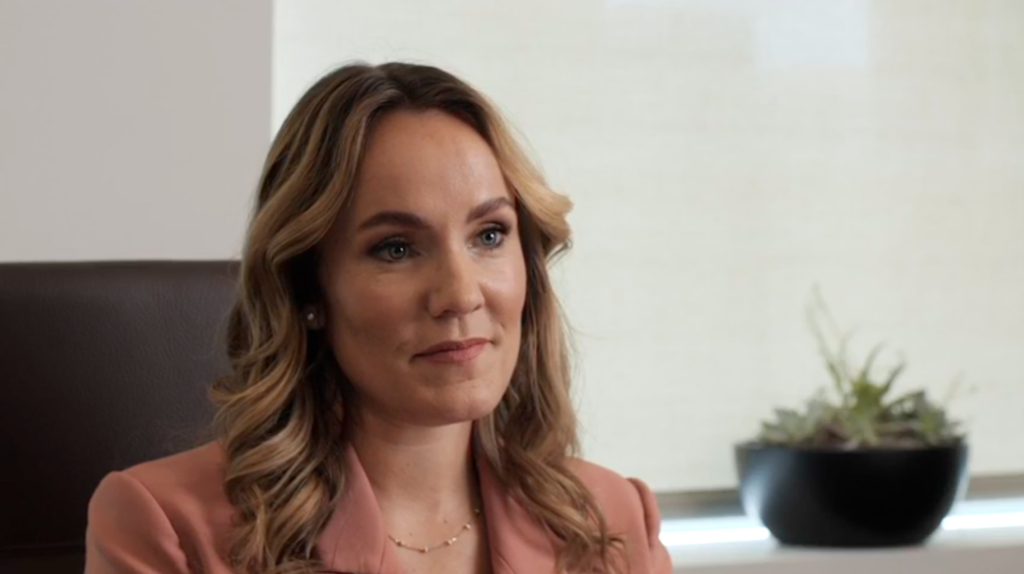
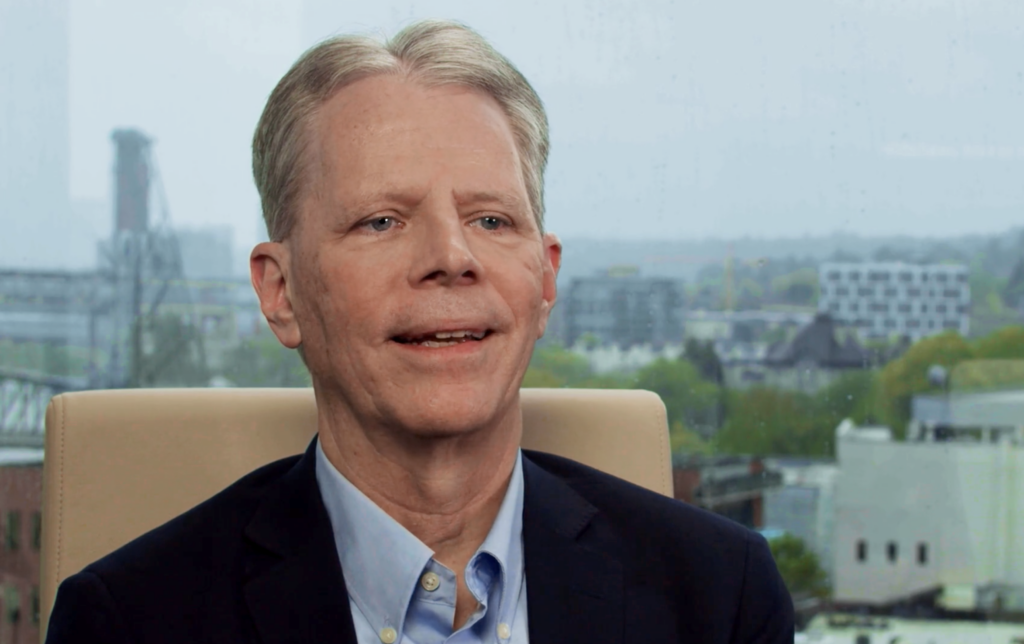
Welcome to Market Perspectives, a Mercer Advisors podcast. Today, we’re going to be talking about Kevin Warsh, who President Donald Trump has announced is his selection to lead the Federal Reserve. I’m Josh Zumbrun. I’m the director of External communications here at Mercer Advisors. And I’m joined today by Don Calcagni, our Chief Investment Officer. Don, thanks so much for being here.
Hey, Josh, it’s great to be here. Pretty exciting topic for today.
So Don, before we dig into the particulars of this appointment, let’s set the stage with a quick conversation. Why do we care so much about the Federal Reserve? Why does this get so much attention in the first place?
Yeah, it’s a great question. I think for most Americans, on a day-to-day basis, the Federal Reserve just does not even like enter into our daily lives. So we just don’t care.
But I would argue the Federal Reserve is the most powerful, the most important financial institution on the planet, the Federal Reserve Bank is the central bank of the United States. As the central bank, it is charged with controlling prices, making sure that we have price stability, but also full employment. This is what we call the dual mandate that our Congress has given to the Federal Reserve.
Federal Reserve was set up in 1913. The whole thinking, Josh, was really supposed to be the lender of last resort. The whole goal was to really stop and prevent runs on the banking system, and the failure of banks that were holding our citizens and families savings. And so that was the whole idea was to really backstop the financial system. And so that’s why Congress set up the financial reserve.
Why should we care?
Is because they set interest rates. And the Fed also has a significant impact on financial markets through the size and management of its balance sheet. The Federal Reserve buys bonds, it lets bonds roll off of its balance sheet as those bonds mature. So it has a significant influence over interest rates on everything from mortgages to the yield that you get paid on your savings accounts and automobile loans and so on and so forth.
And it’s really the institution that bankrolls the strength of the US dollar in many respects. And so making sure that our economy is stable, that it’s well regulated, that our currency is relatively stable vis a vis other global currencies, much of that ultimately falls under the Fed’s mandate.
And over the past year, this has been in the news a lot, not just because they’ve lowered interest rates a few times since the fall, but there’s been a lot of tension between the Fed and the White House. Why has this been such a contentious headline grabbing period?
Well, I mean, certainly, if you think about what any central bank does, it can expand the currency, it can shrink the currency, meaning it can put more dollars into circulation through what we call open market activities by buying bonds and things like that. And so naturally, politicians have a desire to keep interest rates low.
And if you look at the federal budget right now, one of the biggest line items is the interest expense. It is now close to $1 trillion per year that the federal government has to pay an interest on the approximately $30 trillion in debt that we have accumulated. And the federal government continues to add to that pile of debt to the tune of about 1.7 to $1.8 trillion annually right now.
And so the president and certainly other politicians, and certainly the president does not have a monopoly on wanting lower interest rates. All politicians would love to have lower interest rates, because it makes it easier for them to spend. And that’s what politicians love to do. They love to spend. They love to make promises to constituency.
A situation around the world, not just the United States.
Yeah, correct. I mean, we’re not alone. I mean, Argentina is typically the classic textbook case. Where politicians have just cranked up the printing presses and ultimately led to runaway inflation. We style this in Weimar Germany back in the ’20s and ultimately led to the rise of the Nazi party, arguably in Germany. So, I mean, certainly politicians have an interest in keeping interest rates low, and that really gets to the core of the tension between the White House and the Federal Reserve.
So what is the core of that tension?
Well, the president wants interest rates to be lower. The Federal Reserve, however, the FOMC, the Federal Open Market Committee, which is a committee within the Fed that is tasked with setting interest rates and not really tasked with setting interest rates, that’s really the tool through which they achieve their mandate, which is price stability and full employment.
And look, inflation is still running a little hot. We saw inflation spike back in 2022 and early 2023. It has since started to come down. And it’s come down much closer to the Fed’s inflation target which is 2% annually. We’re currently just under 3% inflation rate at the moment.
I think the Fed’s concern naturally is wait a minute. If we lower interest rates, that could ultimately lead to a tailwind and push up these inflationary pressures throughout the economy, and therefore they would be in violation of one of their mandates. Their goal is 2% inflation. They’re trying to get back to that.
And like I said, we’re currently just below 3%. So that’s really the core of the tension. President wants lower interest rates. Federal Reserve is concerned about inflation.
Fed’s also by the way concerned about unemployment. And so the employment picture has darkened a little bit here over the past, say 4 or 5 months. And so that’s why that’s been part of the rationale for why the Fed has agreed to cut interest rates, albeit slowly. There’s been a series of quarter point cuts in interest rates. But the president, other governors that are on the board have wanted to push for a half point reduction in interest rates. Naturally, the FOMC did not agree with that.
So if I can unpack that a little bit, there’s two things. On the one hand, there’s this question of what do you do with interest rates right now. And then there’s a bigger picture question about what’s the structure of the Federal Reserve, and how do you set that up to protect it from political meddling. That’s the politiking the Fed, the Fed independence question.
When Congress set up the Fed, they purposely set it up to be independent from political interference by design. And so the Federal Reserve System consists of 12 regional banks that each have their own governors that are appointed by local bank boards, but there’s also 7 governors that are appointed by the president and confirmed by the Senate.
And so that independence though why is that so important, Josh, it’s important because we want professionals. We want financial experts. We want professional economists who are studying the economy, understand the economy to be the ones ultimately deciding on what are the appropriate interest rates in order to control prices, to ensure price stability, to achieve the mandate.
The challenge is naturally, politicians in the short run want to have lower interest rates.
The way the Fed is designed is these are very long tenured appointments. They rarely turn over. I think it’s once every once every 14 years. Last time my–
14 year terms. Yeah.
So it’s by design set up to really minimize political interference in how interest rates are ultimately set. But it’s that independence that if that independence were to ever be lost or to really be called into question by financial markets, then interest rates could become untethered. And by that, we mean they could violently rise. And so that’s why paying close attention to the bond market, making sure that not just in form, but in practice, that the Federal Reserve remains separate and apart from political interference in the setting of monetary policy.
And so that’s really the context that Kevin Warsh is walking into here. There’s this situation in the near term where the president wants lower interest rates and has been very vocal about that. And then there’s this concern that’s maybe a little bit longer term in nature about what happens to the Fed if you really undermine its independence. Now, what can we make of the market’s initial reaction to the Kevin Warsh appointment so far, it seems that the market has maybe a little bit of a sense of relief.
I think that’s potentially true. I mean, the one thing I would just caution for our listeners is that markets, at any given point in time, are digesting millions of data points of information in real time. This is just one of those. And so there are lots of factors that influence markets. I would argue this is a very important one. And it’s probably one that the markets were very heavily waiting when setting prices on that particular day when Kevin Warsh was announced as the president’s nominee.
And so, I mean, stocks went up slightly. You could argue, OK, that means the market was happy, was content with the president’s nomination. But I think what’s more interesting is we saw a violent sell off in silver and in gold and in cryptocurrencies. And I think that’s very interesting. And that’s because those assets generally are generally believed. I question this thesis. And I think our listeners, our regular listeners know this, but those assets are generally viewed as hedges against the value of the US dollar or hedges against inflation.
And so I thought it was very interesting that we saw silver sell off over 30% in one day, that we saw gold sell off 9% in one day. Crypto I mean, if you look at Bitcoin today, it’s down a solid over 20% from where it was a year ago. And it just recently broke below 80,000 and is well on its way to 70. Last time I checked.
So these assets, which are really viewed to be as hedges against the value of the US dollar, I think ultimately investors were revisiting that particular thesis. And that’s why I think you saw those particular assets go down significantly in value. In fact, I think I saw the one data point for gold. This was the largest single day drop in the spot price of gold in a single day since 1983, [CHUCKLES]
right? So that was a very, very big move in commodities markets. And I think that’s the real takeaway from the President’s nomination of Kevin Warsh.
So let’s look at Kevin Warsh a little bit more closely. I mean, what do we know about his views on the Fed and its role in setting monetary policy, which we were talking about there, but also its role regulating the financial system.
I mean, look, if we go back, I mean, first off, I mean, Kevin Warsh, I think for many of us, the nomination of Kevin Warsh, it’s a bit of an eyebrow raiser. And not because he–
I don’t think is I think he’s a–
I think he’s a very good nominee. Nominee for the position. But it was just a bit shocking because the president has been pushing for lower interest rates. The president has been pushing for a less independent Fed.
And so Kevin Warsh did serve on the FOMC, the Federal Open Market Committee, back in between 2006 and 2011. He was nominated by President Bush to serve on the Fed on the Fed board. And so he was there. He had a front row seat during the global financial crisis. And he’s always been a bit of a hawk, meaning he’s always been very focused on keeping inflation under control and keeping interest rates higher.
And so that’s very interesting because that’s not what President Trump has been pushing for. The president currently is surrounded by weak dollar economists, who want the value of the US dollar to come down. The president has been hammering for lower interest rates.
And again, you can only take Kevin Warsh at his word. You can look at his writings, while he was in residence at the Hoover Institute at Stanford University. He has been a big critic of the Fed, which I do think is what the president was attracted to in his candidacy. But this is a particular Fed governor that even during the depths of the financial crisis, was really concerned about lowering interest rates.
And he was–
and even in the immediate aftermath of the financial crisis, was very concerned about the expansion of the Fed’s balance sheet, the QE, the Quantitative Easing.
So he is front and center. He is very much a hawk when it comes to inflation.
So it’s interesting. Now here recently as part of I think his application for employment to get the job. If you look at some of the recent op eds that he’s written, he has made a couple of comments that based on the coming boom in AI productivity, that it makes sense to lower interest rates, short term interest rates, very significantly.
So that’s a little interesting. I think that’s partly telling the boss what the boss wants to hear so that you get the job.
So it’s a little bit–
we’re hearing mixed messages a little bit from Mr. Warsh at this particular point.
But we’ll ultimately see once he is appointed, it’s going to take a little bit of time. There’s definitely resistance on the Senate Banking Committee at the moment. But I think ultimately time will tell.
But let’s make no mistake, he is very much an anti-inflation policy hawk, and I’m not convinced that he’s going to ultimately march to the president’s tune. I do think he’s going to be an independent minded governor. I did study under one of his colleagues, Randall Kroszner, at the University of Chicago. Randall was on the FOMC when Governor Warsh was there.
And at least from what I understand from Professor Kroszner, Kevin is very much an independent minded person. He believes in the independence of the Fed, but he does also believe the Fed needs to remain accountable to its mandate and stay focused on its mandate, and not drift too far afield. And getting into things that arguably are not part of the Fed’s core mandate.
Now, you just hinted at it there that there’s more hurdles to come or more chapters to be told in this story. Maybe is the metaphor. What’s so what’s up next. He still has to go through a confirmation process. What else do we be looking for as the next part of this story?
Yeah, and I think that’s an interesting point here. Just to go back to an earlier question, is that while the Fed may be independent as it pertains to the setting of interest rates and determining monetary policy, the Fed is very much a political institution that was created by an act of Congress in 1913, so independent in terms of its operation and when it comes to the setting of monetary policy. But the Federal Reserve Bank is fully accountable to Congress.
And so the president nominates the chair of the FOMC. So he will fill one of those board seats. There are 12 or the actually there’s 7 that the president gets to a point. The other 5 are the regional bank President’s that are elected by their boards.
But he will have to get approved by the Senate Banking Committee. And then ultimately, the Senate would have to approve Mr. Warsh’s nomination to become chairman of the Federal Reserve Bank. Now, that’s when he becomes chair of the Federal Reserve that does not mean he’s automatically chair of the Federal Open Market Committee.
Historically, they have been the same person. Not always. So–
Not automatically.
It doesn’t have to. It’s not automatic. And so the FOMC, the other 11 members of the Federal Open Market Committee, they ultimately then would elect their own chair. Maybe those 11 say no, we don’t want Mr.
Walsh as our chair. Maybe we want somebody else. Maybe governor Cook, who the president has been trying to remove as chair of the FOMC. I don’t expect that to happen, to be honest.
I mean, these are economists. I think they value consensus. So I’m not expecting them to be combative. But historically, by convention, the chair of the Federal Reserve Bank has also been chair of the FOMC.
Well, and they do have to vote on any change in interest rates. So he can’t just go in and start changing interest rates by himself. He would have to get that 12 person committee to vote with him or something would have to happen for policy to change. He can’t do it unilaterally I guess is the point.
This honestly has been one of more disappointing or frustrating aspects of the President’s attacks on Chairman Jerome Powell is that while Jerome Powell is the chair of the FOMC, let’s be honest, he is one of 12 votes. He is not a dictator. And so now he certainly has influence. But there are 11 other members of the Federal Open Market Committee that cast a vote.
And so the truth is, while the president is nominating the chair of the Federal Reserve Bank, who will also be on the FOMC, the fact remains that they’re going to set policy by majority vote. And this person, whoever ultimately becomes chair of the Federal Reserve, will ultimately have to be able to convince others to sway others over to their way of thinking, if indeed we’re going to see future interest rate cuts.
And so now, Mr. Warsh is a trained attorney. He’s not an academic economist. I don’t hold that against him.
I don’t think we need an academic economist to be chairman of the Federal Reserve. But he is a trained attorney, and I’m sure he can be very persuasive when he needs to be. So it’ll be interesting. Will he be able to persuade the other members of the FOMC to cut interest rates.
Time will tell. Time will tell.
So I think our takeaway is observers is that this saga is far from over, and we might even look back and say that it’s just getting started. What should our takeaways be though, as investors? As an investor, what do I do with this observation that there’s still a period of potentially significant uncertainty ahead of us regarding the Federal Reserve?
I think one of the biggest takeaways here as investors is that look, there are many things that influence markets. The Federal Reserve is one of those. It’s a very important factor in terms of driving markets. But I think the real takeaway here is to remain broadly diversified, right? For those investors that sadly poured into silver and gold in January because it was, quote, “doing so well.”
I feel bad for those investors. They just got hammered.
And so I think trying to resist the urge to chase hot investments, to chase gold and silver and these other things.
I do think those are mistakes. And this is not a nominee that I think many folks actually really expected. I mean, there’s certainly a short list of candidates I would have expected somebody else, somebody who’s more aligned with the President’s thinking than Kevin Warsh.
Well, these things happen. I will say that I do think this is probably one of the best nominees that this president has made to an important agency or department. And so I think Kevin Warsh, I mean, it certainly could have been a lot worse. I actually think that Kevin is a strong candidate for chair. So hopefully he does a great job for the country and for the world.
But the takeaway again, for us as investors, Josh, is remain diversified. Keep politics out of your portfolio and try to really try to resist timing. Things like commodities and stocks and bonds don’t play that game. Just build a well-designed portfolio. And chances are you’ll be just fine.
Don, thanks so much for this discussion. I think that’s a great place to leave it for today.
Great. Well, thank you so much, Josh. This was fun.
We’ll obviously be continuing to follow this. Like we said, this isn’t the last development in the story of the Federal Reserve. If you’re already a Mercer Advisors client, obviously don’t hesitate to reach out to your advisor and talk about how your portfolio is positioned. And if you’re not a Mercer Advisors client, but you’re interested in more information, visit our website merceradvisors.com. It starts with the phone call. Thanks so much for being with us today on Market Perspectives.
[MUSIC PLAYING]
PLAYING]



For general information purposes only. No portion of the podcast serves as the receipt of, or as a substitute for, personalized investment advice from Mercer Advisors. All expressions of opinion reflect the judgment of the speaker as of the date of recording and are subject to change. Some of the research and ratings provided in this podcast come from third parties that are not affiliated with Mercer Advisors. The information is believed to be accurate but is not guaranteed or warranted by Mercer Advisors. Different types of investments involve varying degrees of risk, and it should not be assumed that future performance of any specific investment or investment strategy, or any non-investment related planning services, discussion, or content, will be profitable, be suitable for your portfolio or individual situation, or prove successful. This podcast does not imply a recommendation or solicitation to buy or sell any referenced security or engage in any particular investment strategy. Diversification and asset allocation do not ensure a profit or guarantee against loss. Past performance may not be indicative of future results. Historical performance results for investment indexes and/or asset classes, generally do not reflect the deduction of transaction and/or custodial charges or the deduction of an investment-management fee, the incurrence of which would have the effect of decreasing historical performance results. Economic factors, market conditions, and investment strategies will affect the performance of any portfolio and there are no assurances that it will match or outperform any particular benchmark. The podcast may contain forward-looking statements including statements regarding our intent, belief or current expectations with respect to market conditions. Listeners are cautioned not to place undue reliance on these forward-looking statements. While due care has been used in the preparation of forecast information, actual results may vary in a materially positive or negative manner. No portion of the content should be construed by a client or prospective client as a guarantee that they will experience a certain level of results if Mercer Advisors is engaged, or continues to be engaged, to provide investment advisory services. Private investments are subject to substantial risks, including limited liquidity. Therefore, private investments are not suitable for all investors. Options investing involve unique risks, tax consequences and commission charges and are not suitable for all investors.