

Key Points Covered in this Podcast:
- The “Die with Zero” philosophy encourages intentional spending to maximize life experiences rather than accumulating wealth for its own sake — because you truly can’t take it with you.
- Shifting from a saving mindset to a spending mindset in retirement is one of the most difficult psychological transitions families face, often rooted in deeply ingrained beliefs.
- Comprehensive financial planning is the essential foundation for purposeful spending — you need to confirm you have enough before you can confidently enjoy what you’ve built.
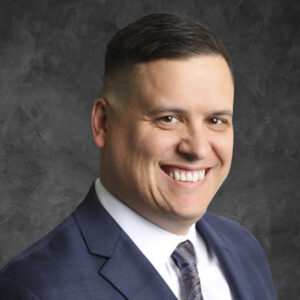
The only thing that’s certain is that you’re here right now. So you need to have some life right now — because at the end of the day when you’re on your deathbed, you’re not going to look back and wish you had more money. You’re going to look back and wish there were things you did that you did not do.
Transcript
The content shared on Your Life, Your Wealth Network reflects the views of the host and guests of the program only, and are not necessarily the views of Cordasco Financial Network or its advisors. This media production is educational in nature and should not be construed as financial, legal, or tax advice or a solicitation or presentation of sale of any financial products or solutions. Please consult a professional prior to making any financial, tax, or legal decisions.
Welcome to the Your Life Your Wealth Network, helping you find clarity and comfort for your life and wealth.
John Walker
Hey, welcome to the Your Life, Your Wealth podcast. I’m John Walker, Regional Vice President at Mercer Advisors. Always a pleasure to be with you. And today, we’re gonna talk about something that you may have not heard us say before. Maybe an expression you’ve seen in the news lately, or maybe one may have caught your ear, and that’s the concept of dying with zero.
For many people they just went into a panic, and I will preface this by saying no one wants you to run out of money, and it’s certainly not something we’re going to discuss today. But this concept of maximizing all you can from your money and your life — it was made popular by a hedge fund manager who wrote a bestselling book called Die with Zero: Getting All You Can from Your Money and Your Life. And the central thesis of the book is that it’s better to maximize experiences rather than maximize your wealth.
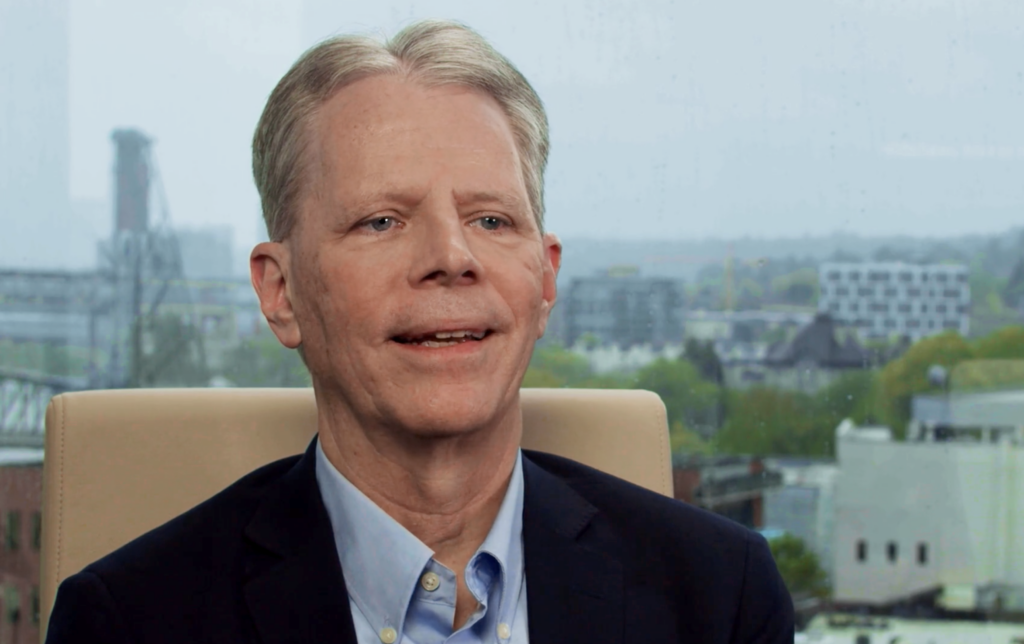
And so, as we approach what they’re calling the great wealth transfer, where it’s estimated that $90 trillion — with a T — will pass from older generations to heirs over the next two decades, it presents a huge shift in assets and also potentially in what you can do with those, and what retirement and spending and everything else may look like for the generations that inherit this wealth. So to talk about this concept, what it means, how it can be relevant in the financial planning process, and certainly the risk that it does present, is my good friend and colleague, CERTIFIED FINANCIAL PLANNER® and market leader here at Mercer Advisors, Mr. Jason O’Meara. Jay, thanks for joining me.
Jason O’Meara
Of course, John. This topic lines up pretty well with almost every conversation I have with families, right? How do we live the best life you can with the money you have?
John Walker
Yeah, and I think this book is immensely popular and it certainly challenges many people’s mindset around retirement and retirement goals. And I think we should have a conversation around — is it practical or is it just sort of idealistic? And how much of it can you use? I think the way we’ve had this conversation, and I’ve had a few of these conversations with families with you, is we focus a lot on purpose. Help us understand the purpose of your family’s wealth. What does this money mean to you? How does it serve your family’s needs? And when you begin the planning conversation with that as your sort of morning star — when that is your guiding principle, not how much money can we accumulate before you die — it does kind of lend itself more to this concept. We’ve spent a lot of time understanding what people want out of their life because I’ve heard you say it a million times: the money is a tool. It is not the goal. And it’s really important to shift the mindset to that — it’s important, but it’s not the only goal.
Now, one of the things that certainly gets a ton of coverage in the media is that most Americans aren’t saving enough to even be prepared for retirement. So this idea of spending more and dying with zero maybe doesn’t apply.
Jason O’Meara
And that’s probably what people originally thought when you said “die with zero” — that was probably the original thought. I know the first time I heard this, I was like, well, dying with zero is easy if I just don’t have any money. I will — I’ll die with zero, right? But no, the idea there is — I always joke, my financial plan is to have my last check be to the IRS. So that means I made it to the end of my life and I didn’t leave anything on the table. But that’s really, you know, impossible to plan for exactly, because we would have to know exactly when you’re going to die. So this math would be really easy — I probably wouldn’t have jobs.
John Walker
The math would be super simple if you knew all the variables.
Jason O’Meara
Yeah, exactly. But we don’t know when that time is going to come. So what you need to do is just kind of prepare for tomorrow, but the whole concept here is not preparing for tomorrow so much that you forget about today.
John Walker
I think that’s it. I think that’s the really — you know — take: the “Die with Zero” is meant to trigger a response. It is meant to catch your attention. It’s a really catchy phrase. But what the book’s core is, is: don’t hoard your wealth at the expense of living your best life. Don’t sacrifice things that you can’t get in the future. And it’s not necessarily spending vast amounts of money. It is accumulating memories instead of accumulating money. So that’s really what it’s about — spending your money intentionally.
Whether it’s on yourself, on loved ones, on charitable contributions, or just maximizing your life experience. Because there’s this old expression — no one wants to be the richest man in the graveyard. Like, you can’t take it with you. So you’ve spent probably much of your lifetime working and saving and trying to prepare for retirement. But don’t do it all for the future unknown and sacrifice everything today. And so that’s kind of the equilibrium.
Jason O’Meara
I would say that you’re trying to find that equilibrium between saving for tomorrow — because you have to, there’s no way around that. No one’s coming to save you. There are no loans for retirement. So you have to put some money aside for the future. But what we don’t want to do — and we do see this a lot and we have to have these conversations — is you don’t want to put so much away that you’re ignoring this time. Because again, as we talked about earlier, you don’t know when your time’s up. And what I hate to see, when you hear stories about this, is people who died at 45 — but they didn’t do anything because they were preparing for a future that just never came. So the only thing that’s certain is that you’re here right now. So you need to have some life right now, because at the end of the day when you’re on your deathbed, you’re not going to look back and wish you had more money. You’re going to look back and wish there were things you did that you did not do.
John Walker
Absolutely right. And there’s sort of a cycle on average for what people’s lives look like, right? When you’re young, you have time and health, but probably very little money. Then when you’re in your middle age, you have money and health, but a lot less free time usually, because you’re in the midst of raising families and careers — or whatever it looks like for you. And then in later years, you often have time and money, but your health is not what it was when you were in your twenties. So how do you balance that?
Jason O’Meara
It’s a funny thing, John — that’s where that midlife crisis comes into play, right? I always joke — there’s no such thing as a midlife crisis. That guy could finally afford the thing he always wanted. He always loved cars. Now he can finally afford that Corvette in his 40s or his 50s because now he has money. And that’s kind of what this is saying — hey, there’s a thing you want to do at 50, do it. Let’s plan for it to make sure that it doesn’t completely take away that future opportunity — but you also get to have some level of that right now and you get to enjoy life.
John Walker
And really, what again — intentionality. How does this fit within your plan? You shouldn’t go out and buy a Maserati if you can’t afford it — that’s not what this is suggesting, and nor would we. But finding — I love the word you used earlier, Jason — that equilibrium. There’s balance. There’s got to be finding what brings you joy and maximizing the value out of every dollar that you have. And that for some people is experiences; it’s things; it’s the fancy car they always wanted since they were a little kid.
For some people it’s charitable and gifting — being able to see the impact that their wealth can create while they’re here to see the fruits of it. Whether that’s helping your children buy their first house, or donating to charities that are really important to you while you’re alive so you can actually see the impact, rather than waiting for all of these things when you’re gone.
Jason O’Meara
Exactly. How many times, John, do we say — you have a choice? You have a choice to give to your kids, or to charity, or whatever it is. Do you want to give it to them with a warm hand or a cold hand? With the warm hand, you get to be there — you get to see it, you get to get that feeling of pride or joy, you get that little kick out of it. But if you wait, then it happens when you’re not here, and you don’t get to experience that. So there’s, again, an equilibrium there as well. You hear that a lot — it’s finding that balance. Strike that balance. That’s what we need to find for you.
John Walker
And Jason, I think what’s really important to note is that many families struggle to do this because they’re afraid that they will run out of money. And without a really well-built plan that actually validates and can help demonstrate to you that you have sufficient resources to make it through retirement — that you have sufficient resources to be OK — people hesitate to spend.
Jason O’Meara
If you think about it, John, as a planner, this is one thing that I constantly try to figure out how to crack this nut. We can sit there and show somebody logically what a plan — Monte Carlos and all these things — showing, hey, you’re fine, you can do this, this is OK. But we’re really up against decades of ingrained teaching and beliefs that you have to save money, you have to save your money, you have to save money for retirement. And then when you’re in retirement, all of a sudden the mindset needs to shift, and that is a difficult transition. We’ve had therapists talk about this — how do we get this transition? How do you transition from having a paycheck every month, or every week, or every other week, whatever you get paid — and then switching over to: I now have this finite amount of money that I need to live off of, and I don’t know how long I’m going to live? So it’s really difficult to break that inner dialogue of “you need to save, you need to save, you need to save.”
I mean — a personal experience — my wife and I were going through our spending, which is not outrageous at all. We felt we lived well within our means, and she said, “We’re spending too much money. We need to save money.” And I had to show her: hey, we’re not spending too much money, we are saving money, we do need to live our lives still. But it’s really difficult because in her mind she was always told, “save your money, save your money, save your money.” So it’s really difficult to break that inner dialogue — that little voice in the back of their head saying, “I still need to be saving, I can’t — I should not be spending this. This is my retirement money. I shouldn’t be spending it” — even though they’re now in retirement, which is the goal of that money.
John Walker
Yeah, absolutely. And so that mentality, that mindset is so difficult to shift. And it’s particularly difficult since those behaviors may have allowed you to get there. People have rational fears about longevity risk — outliving their savings. They’re worried about medical emergencies, disability, or unexpected things — anything that could derail even the best laid plans.
Jason O’Meara
There’s their history, right? What have they seen? Did Grandmom have to move in with them because she ran out of money at a young age? That’s going to imprint on you. Or her mom and dad didn’t have enough saved and they lived in very difficult circumstances because of it. So you don’t know what their past experience was to be able to help them forward. And those things are just so prevalent. I’m really emphasizing this because if you’re listening to this and you’re feeling those feelings, I just need you to know you’re not alone. It’s the most common thing we see — that feeling. So if you’re feeling that way, you’re not alone, but there are ways forward.
John Walker
How do you do it, Jay? How do you get your mindset to shift? I think I’ll go back to what I said earlier — it’s helping people recognize the psychology and behavior that keeps them from spending, and reorienting it to: how do you shift that mindset to be able to see the value in what your wealth may be able to do for you? Would you enjoy being able to take your family to Disney World? Would you enjoy being able to gift money into your grandchildren’s 529 so that you can ease the burden on your children for saving for college? Would you like to help your children buy their first home in a really expensive real estate market — recognizing that that gift today, rather than waiting several decades for you to pass away, could really make a meaningful difference in their life now?
And what is holding you back from doing it? That’s the whole idea behind this “Die with Zero” mindset — it’s not “blow through all your money and not be able to afford retirement.” It’s: what’s the balance? Can you do these things? And then later in life, Jason — even if you don’t have the energy or physical capabilities to globetrot and do all the things you maybe did when you were younger — are there things that you can still do? Can you pick up a hobby? Can you take an online course? It’s always continuing to do things that bring you impact and provide purpose.
Jason O’Meara
Yeah, purpose is everything. And that’s why they always say — people who win the lottery tend to be miserable because they lose their purpose. Most people’s identities are wrapped up in their jobs. So when you retire, all of a sudden that purpose is gone — so you have to find something to replace that.
But John, something you mentioned that I really do agree with — it’s understanding why you’re feeling the way that you’re feeling. You have to understand it, label it, and determine why, and then ask: is this true? One thing I tend to tell my families to do is: why don’t we go spend a little bit and see that the world didn’t end? Just go on a vacation. And when you come back you’ll see your accounts are still there, everything’s fine, and nothing ended. Let them experience that and see that the pain they thought was going to come didn’t.
John Walker
It takes a little bit of a leap of faith. It takes a little bit of overcoming this behavior that’s ingrained in you — and that’s not easy.
Jason O’Meara
And therapists are paid really good money. Exactly.
John Walker
And it’s — no, again, this has to be done with balance. The extreme ends of this spectrum may not apply to you.
Jason O’Meara
Well, that’s actually important, John — because this whole process, this whole “Die with Zero” concept kind of assumes that you’ve saved enough to be able to do these things. And that’s where the planning really comes into play. Because if you don’t have enough saved, well, then you’re not in equilibrium, and you need to maybe put off a few things to essentially get to that point of security. So there is an element of this not being a free-for-all — hey, go nuts, go spend all your money. You need to check in and you need to do a plan. You need to know where you’re at — does this fit your reality? And if not, how do we get it to?
John Walker
And that’s really probably the place to start. No matter what, Jay, we always come back to where we started — the root of what typically allows families to be successful here is having a good plan. Understanding what the balance is. Are you on track to retire? Do you have a strategy in place that incorporates your taxes and has the right investment allocation and the right level of risk and all these things? So there’s a big assumption here — as you said — that this idea of “dying with zero” doesn’t apply in its intended way for those who are just struggling to get to retirement.
So if you’re listening and you’re on that end of the spectrum, your plan might look a little different — and that is OK. But if this is something, if this mindset resonates with you, if you see this as being something like, “I would love to be able to do that” — that’s something you should share with the team that’s helping you. Because it may not be dramatic things, but it could be even little things. A $10 a month contribution to an organization that’s important to you probably won’t break your plan, but it might bring immense joy and satisfaction and meaning — knowing that you are helping someone else in need. So it does have an opportunity to apply to anyone. And if you are retired and you do have a plan that allows you to be more discretionary with your assets — it does allow gifting or spending beyond what you’re doing today — this is really good advice to evaluate what you would like to see more of. It’s not for everybody. Some people will never get over the fear of running out of money. And if there are leftovers and it goes to children, grandchildren, or charities — great — and that’s also OK.
Jason O’Meara
Good point, John, because some people’s goal is to leave money to their children and grandchildren — in which case, perfect. There’s nothing wrong with that. The best part about financial planning is it’s very personal to you.
John Walker
Right.
Jason O’Meara
It’s whatever your goals are — not what John and my goals are. It’s what your goals are.
John Walker
And frankly, our goals are irrelevant. We tell families all the time: you’re going to help us identify what’s important to you, what purpose this wealth serves. It’s a means to an end. It’s a tool. It’s a mechanism. So what do you want this to do? And as you said, Jay, if at the end you want to give a certain amount to everyone in your family — wonderful. That’s an outcome we can plan for and give you strategies around. In a similar manner — if it would bring you joy to see a smiling face when your grandchild graduates from high school and knows they have a 529 plan to help them pay for future college — then let’s plan for that instead of leaving it all at the end. Let’s find, Jason, that equilibrium that you discussed. What’s the right approach from you? Jason O’Meara, CERTIFIED FINANCIAL PLANNER® and market leader here at Mercer Advisors, thank you so much for joining me today.
Jason O’Meara
Of course, man. This was a great conversation here.
John Walker
So if you’re worried about being the richest person in the graveyard and you don’t know how to unwind this mentality — if you don’t know how to shift or break away from the way you’ve gotten to where you are, or if you just have questions on whether you’re on track for a good, safe, comfortable retirement — we’re always here to help. Give us a call anytime at 215-558-3500. That’s 215-558-3500. Or you can email me at jwalker@merceradvisors.com. I’m John Walker, Regional Vice President at Mercer Advisors. Thanks so much for listening to the Your Life, Your Wealth podcast. See you next time.
If you’re interested in learning more about applying the principles we discussed to your personal financial circumstances, please visit Cordasco Financial Network at CFNplan.com.



For general information purposes only. No portion of the podcast serves as the receipt of, or as a substitute for, personalized investment advice from Mercer Advisors. All expressions of opinion reflect the judgment of the speaker as of the date of recording and are subject to change. Some of the research and ratings provided in this podcast come from third parties that are not affiliated with Mercer Advisors. The information is believed to be accurate but is not guaranteed or warranted by Mercer Advisors. Different types of investments involve varying degrees of risk, and it should not be assumed that future performance of any specific investment or investment strategy, or any non-investment related planning services, discussion, or content, will be profitable, be suitable for your portfolio or individual situation, or prove successful. This podcast does not imply a recommendation or solicitation to buy or sell any referenced security or engage in any particular investment strategy. Diversification and asset allocation do not ensure a profit or guarantee against loss. Past performance may not be indicative of future results. Historical performance results for investment indexes and/or asset classes, generally do not reflect the deduction of transaction and/or custodial charges or the deduction of an investment-management fee, the incurrence of which would have the effect of decreasing historical performance results. Economic factors, market conditions, and investment strategies will affect the performance of any portfolio and there are no assurances that it will match or outperform any particular benchmark. The podcast may contain forward-looking statements including statements regarding our intent, belief or current expectations with respect to market conditions. Listeners are cautioned not to place undue reliance on these forward-looking statements. While due care has been used in the preparation of forecast information, actual results may vary in a materially positive or negative manner. No portion of the content should be construed by a client or prospective client as a guarantee that they will experience a certain level of results if Mercer Advisors is engaged, or continues to be engaged, to provide investment advisory services. Private investments are subject to substantial risks, including limited liquidity. Therefore, private investments are not suitable for all investors. Options investing involve unique risks, tax consequences and commission charges and are not suitable for all investors.
This presentation may contain forward-looking statements including statements regarding our intent, belief or current expectations with respect to market conditions. Listeners are cautioned not to place undue reliance on these forward-looking statements. While due care has been used in the preparation of forecast information, actual results may vary in a materially positive or negative manner. No portion of the content should be construed by a client or prospective client as a guarantee that he/she will experience a certain level of results if Mercer Advisors is engaged, or continues to be engaged, to provide investment advisory services.
Private investments are subject to substantial risks, including limited liquidity. Therefore, private investments are not suitable for all investors.