

Key Points Covered in this Webinar:
- Values-based investing — including ESG, socially responsible investing, and impact investing — adds a qualitative lens to portfolio construction without requiring you to sacrifice diversification, returns, or low costs.
- A sound financial plan always comes first: understanding your tax needs, liquidity requirements, and time horizon ensures that values-aligned investing supports, rather than undermines, your long-term goals.
- Women tend to be goal-oriented, long-term investors with lower portfolio turnover, giving them a natural advantage in values-based investing, but the critical first step is simply starting the conversation with your advisor.
- Core values remain consistent across a lifetime, but how they are expressed in a portfolio evolves with each life stage, from ESG funds in your 30s and 40s to legacy and estate planning in and around retirement.

It’s really not a knowledge gap. It’s a conversation gap.
Transcript
So Mercer Advisors specializes in working with women.
This is something that we have focused on over the last several months of really how do we design and build a practice focused on serving the unique needs of women. Whether you’re in a different age and stage of life, you’re building a family, building a career, maybe you find yourself with the loss of a spouse or going through a divorce. Maybe you’re running a business or a professional executive woman. This conversation is gonna be one for you today.
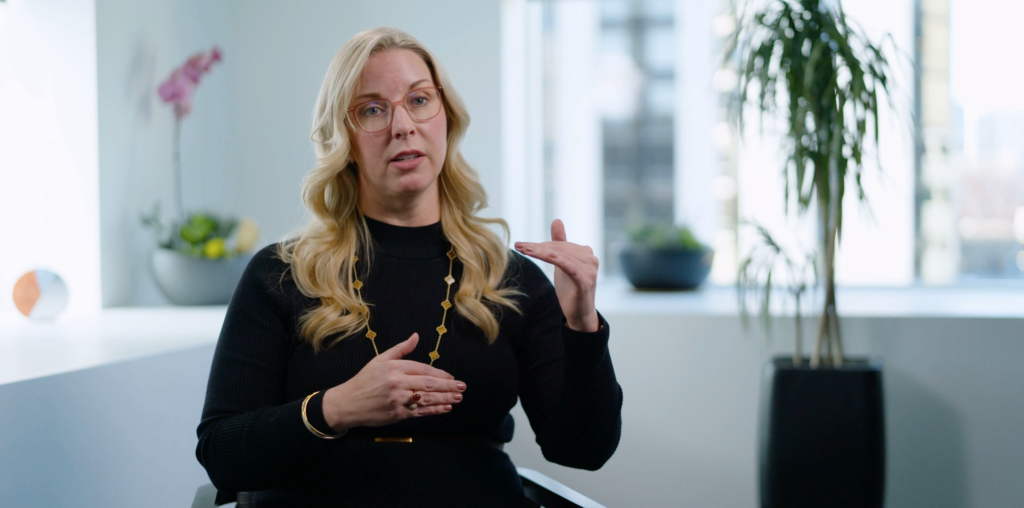
And I’m thrilled to be joined by two brilliant colleagues who we all happen to be in New York today. So we are coming to you live from our New York office and thrilled to be joined today by some fabulous colleagues. Gaby Mollick is a certified financial planner as well as a chartered SRI counselor. And today, she’ll actually be attending the investment news awards dinner tonight as she was recently nominated for advisor of the year focusing on ESG and responsible investing.
So today’s topic is perfectly timed for this the subject matter expert work that Gaby does. So, Gaby, I’ll let you introduce yourself in a moment.
Yeah. Thanks so much, Laura. It’s really exciting. I’m joining here in New York City, but originally working out of Colorado as a Wealth Advisor where I have the absolute pleasure of getting to help people and their families achieve financial freedom. So like Laura mentioned, in addition to being a certified financial planner, I am also a chartered socially responsible investments counselor, and I sit on our investment subcommittee here for values based investing.
Gaby, we’re so glad you’re here today. Also joining us is Kelly Gaur, a regional vice president who’s and Kelly has hundreds of conversations with women every single day and helping them figure out how to preserve wealth, transition that wealth to the next generation, and put strategies in place to help them achieve your goals. So, Kelly, welcome. I’ll let you introduce yourself.
Thank you so much, Laura, and it’s great to be here. Great to be here, everyone. Kelly Gaur, Regional Vice President here with Mercer Advisors based in New York City. In my role, I really have the privilege of meeting with individuals and families, many of whom are women, as they go through the process of finding the right wealth management firm and team for them and their family. And over the course of getting to know many families, in my time here at Mercer advisors, the most fulfilling conversations have really been around the holistic nature of thinking about wealth and and really how the conversation has evolved from thinking about managing a portfolio to creating and building a legacy. So super excited for the conversation today to talk through values based investing and and how we can align our portfolios with our values.
Fantastic. So here’s what we’re gonna do today. We’re gonna spend really the next thirty five minutes in this conversation, and then we’re gonna open it up to hear from you. But I don’t want you to have to wait until the end to put your questions in our q and a box, so feel free to use the comment, the chat feature to drop your questions in because we would love to be taking those live today as well.
And so each of us at the end will also leave you with one thing. So, again, please drop your questions in that chat because, again, we wanna make sure this is meaningful and time well spent for all of you. So I wanna start with something that is both a challenge and really, I think, an opportunity. You know, women today are controlling more wealth than we ever have before.
As of today, we’re seeing women controlling about thirty four trillion dollars, and that’s projected to continue to grow by twenty thirty. That’s not some far off year. Right? That’s four years from now.
I kept hearing about this great wealth transfer that’s happening. It’s coming. Well, I’m here to tell you today, we are in it. We are in the great wealth transfer right now.
And some of these stacks stats really just speak for themselves. You know, women are incredibly focused on values based investing. Seventy one percent of women said that sustainability they take sustainability into account when they’re thinking about choosing investments compared to fifty eight percent of men. So very important topic for women.
Another study that I saw by Investment News talks about seventy percent of women are really focused on wanting value their values to align with their investments. And we’re seeing this trend pick up more and more. So I wanna just kind of start. And, you know, Gaby, let’s start with you.
Talking a little bit about maybe why this gap exists. Why are are women more focused on this? And what can we be thinking about?
Yeah. Thanks, Laura. I think this conversation really complements so beautifully with the women in wealth conversation because the studies do show that women, when looking at their portfolio, do care more than just about the profits. Right?
They care about their values and the impacts they can make with their investments. And we’ve really seen values based investing continue to grow throughout the recent years. And as we look at the women in wealth trends with women being breadwinners, you know, women earning more of the wealth and managing more of their family’s wealth because, as you saw in those stats, women are just living longer and will likely be managing their family’s wealth. So we do expect this trend to continue.
And one thing I think that’s maybe stopped a lot of women is the complexity, and we’ll get into that in the large umbrella that is values based investing and some of the actual strategies that you can look at when implementing this in your portfolio. But I think a lot of financial and wealth management has been a lot of cookie cutter, maybe one size fits all. And this is why we love so much here at Mercer advisors the importance of having a holistic plan, truly understanding you, your values, and your goals to implement that in your cash flow throughout your life. So I love that this conversation is not leaving out the the impact, the profit, and not sacrificing the returns.
Yeah. I think that’s a really important piece to consider.
So, yeah, I’m excited to get into this.
I love that. We’re gonna we’re gonna cover a lot. We’ll get into some of the definitions in a moment. But, Kelly, you know, you work with clients every day. You see this on the on the ground with the the decisions that women, that families are making every single day. What are you seeing as as far as the interest level or the excitement that women specifically are having around values based investing?
Yeah. Absolutely. I mean, I think there’s there’s a real shift not only in in the industry, but also in the conversations. Right?
And and women in particular think about money holistically and relationally, and and the conversation is evolving beyond kind of how is my portfolio structured or what are my returns to kind of why do I have this wealth? What is my purpose for this wealth? And and as this industry has changed and we’re talking about, you know, customized portfolios and customized relationships, I think there’s an increasing understanding that whether you’re working with a manager or an advisor, women and and clients in general still have agency over their portfolios. Right?
And it’s not this idea where you hand over your money to someone and do what what they tell you to do.
Right? It really is a two way street, and so this is really opening doors for new conversations. It’s really not a knowledge gap. It’s it’s a conversation gap.
And and so we’ll talk through today too some some ways that you can you can broach the conversation with your advisor, some different analytics that are available. But this is a super exciting time to be in the industry and having these conversations. And if you take anything away, you know, this is available to everybody. Right?
And that’s what’s so exciting about this conversation.
I love that you said, agency. You know? And I think for women in particular, agency is incredibly important. Like, you can just do stuff.
You can you can find this out in your portfolio. You don’t have to settle for the cookie cutter model. You can ask questions. You can you can look deeper into if this is something that’s important to you, let’s let’s figure out a way to build this into your portfolio that supports your your long term goals.
So, Kelly, you also said something, and and, Gaby, you kinda touched on this as well. You know, it’s not an a knowledge problem. It’s not, you know, a financial literacy problem. It’s it’s more of a conversation problem.
You know, women are wanting this. They’re asking for this, and they need somebody to kinda open the door, show them what’s available. But I wanna just for the audience and and and attendees, listeners today, I wanna spend a little bit of time talking about, like, what the heck is values based investing? You know, we’ve we hear all these different terms.
There’s values based investing. There’s socially responsible investing. ESG, which is environmental, social, and governance investing. Impact investing.
There’s a lot of different things that we can hear. So I’d love to kinda just break it down, make it simple. So, Gaby, maybe I’ll turn it over to you as the subject matter expert to just walk through what are we talking about when we when we say values based investing. What are the different types of things that we’re seeing there?
And how do we kind of think about the different buckets or the different terms? Maybe just start with socially responsible investing. Okay.
Yeah. Because there is such a big umbrella when we talk about values based investing. So, yeah, let’s get into the actual strategies of how you can look to implement this in your portfolio.
I do wanna mention, like, what is ESG? Right? What does that stand for? What is environmental social governance? And I just wanna point out that this is a additional lens, additional form of analysis when we think about how portfolios are constructed with our typical quantitative analysis and do the companies I own provide profit, and should I hold them in a portfolio? So this is really an additional qualitative lens to the companies I own in my portfolio and how they may be impacting the environments that they operate, the employees that work for them, and the consumers that they serve with their goods and their services.
So we we wanna be mindful that a good responsible portfolio is something that’s globally diversified, responsibly managed, has a plan and purpose behind it. Right? And then this is all in addition to that. So you mentioned socially responsible investing.
I think socially responsible investing is really great for the folks that are living their life according to their values. Right? I have so many clients that come to me and say, I’m I’m volunteering for this organization or I’m donating to my church or I’ve swapped to solar and electric vehicles, but I really looked at my portfolio and thought, I’m not doing anything to align with those values there. So with socially responsible investing, you can really take those maybe more moral or ethical obligations that you hold near and dear and apply a strict lens to the companies that you invest in.
So with those socially responsible investments, you can maybe express religious values. Something typical there is removing companies that you may deem as a sin a sin based on your religion. Another one may be an a popular example is private prisons. Someone would like to exclude that type of industry or sector from the portfolio.
And another popular one is environment. So screening out maybe big polluters from the portfolio is something really popular with a socially responsible. And I would say that’s a little less popular than your broader ESG Analyzed portfolio. If you’re looking for something broad, if you’re a beginner or maybe if you cannot clearly define your value, I would suggest considering an ESG portfolio. It’s, again, the easiest to implement. You can apply this ESG lens pretty much to any portfolio or fund you own these days.
And, that’s an additional measure or risk mitigation tool used for analyzing companies and funds to say these companies may be better suited to evolve with an adapting client transition, or be prepared for environmental issues that may we may see pop up. So, again, big umbrella here with the values based investing. Best in class ESG is a great thing to consider if you’re looking to get into this. Or if you’re looking to get really particular in screening out companies, you can get into socially responsible investing.
I love I love that you said it’s it’s a lens, and it’s it’s not a label. I love that framing because it’s kind of the lens in which you you view the world, what’s important to you, what do you and your family most value, being able to actually apply that lens to your portfolio so that you can feel good that my money is also aligned with the things that are most important to me. So maybe the next question, Gaby, Kelly, feel free to jump in here as well.
I I’ve I’ve done I’ve been in this space a long time. And and, you know, ten or twenty years ago, you know, there was this myth out there that if you invested in values based investing or socially responsible, that you actually gave up a little bit on return. So I wanna talk next about kind of the approaches and and trade offs, you know, the pros and cons here for values based investing.
You’ve touched a little bit on that, but wonder if you wanna just go a little bit deeper on what are some of those trade offs, and what might clients or prospective clients expect when looking at a portfolio like
this?
That’s a great question because we want to make sure again, the goal of today is to just really empower you with the knowledge and the language to explore this deeper in your portfolio.
And, again, with a broader ESG lens, you’re still able to remain really well diversified, really liquid in ensuring you can have those cash flow goals that you need to sustain you and your family’s goals throughout retirement.
So I would say that’s probably, as you’re looking at the screen, more to the the far right of this. Excuse me. And the the more exclusion and the farther left you get on this chart and the more companies and sectors you choose to divest from, there’s where you can start to really see some discrepancy in returns in comparison to the market.
A good example of that would be a client told me, I had a cousin that smoked cigarettes all of his life and passed away from lung cancer, so I don’t feel right in supporting and investing in tobacco companies. So I can remove that sector from my investments entirely without probably sacrificing a lot of market like returns. But when you start to get into a lot of sectors, like more maybe I’m thinking of our Catholics Catholic based values portfolio. When you’re truly starting to remove a lot of sectors, that’s where you may get into some different things.
Give up give up some returns.
So kind of finding finding the balance between is this you know, I I want this completely out of my portfolio, or I’d like to actually tilt my portfolio towards companies that are that are doing really well. Think one of the things that I’ve seen more recently is a lot of different companies are focused on this engagement piece where maybe they’re the company itself is not a socially responsible or or values based type of company. You know, you could use an example of, like, Walmart, for for example. Walmart might people might not consider that to be, you know, something that they would invest in.
However, in recent years, companies like that are actually seeking ways that they can about how they’re doing packaging, thinking about how they’re recycling. So kind of having that environmental lens, they’re they’re taking steps forward. And so that’s, I think, part of the part of the screen or part of the lens that you can also apply is these are companies that are in large sectors, but are they also doing things to better the environment, better the world While still, you know, running their day to day day to day business? So that’s, I think, another lens that that people and and a different approach that people can take.
So, again, kind of just to give the audience, this is more of a set kinda setting the table for what we’re gonna be talking about today so you have a little bit of the context. Gaby, I love the word that you use, the language, because there is a tremendous amount of jargon, especially in the values based, socially responsible. We probably had, you know, ten different acronyms already today. So just wanna focus on that for a moment.
But I’ll I’ll pause for a minute and just kinda wanna ask a a question really around, you know, why do you think, Kelly you know, Kelly you know, maybe I’ll just start with you. Why do you think this resonates so much with women? Like, why are you why do you think this is coming up so so meaningfully in the conversations that you’re having?
Yeah. And I think it actually goes back to to the previous question around, you know, how do we think about returns? And women think about returns differently. Right? As I mentioned earlier, women are thinking about money relationally, holistically.
There’s a purpose attached to it. There’s a why attached to it. And so if you’re looking just at portfolio returns, you’re not having that full conversation. And I think the purpose of today is really to enlighten everyone on the line that that the conversation can extend, and and there’s a lot of value, no pun intended, in really talking about things around the portfolio and and in your life and your values there.
So so I did I did just wanna mention that, but I think why this is so important now is you have more women breadwinners, you have more women primary decision makers. And in engaging with advisors, this industry is also evolving, which is so exciting. The way that advisors are working with clients, the the types of advisors that are choosing to enter this industry, even over the past five years, there’s been change. But certainly, if you look back ten, fifteen, twenty years, this industry does not look like the one that a lot of us started in.
And so kind of a combination of all those is why I think that this is an awesome time to kind of re bring up this conversation and encourage folks to kind of have that language and that verbiage to think about what do I value, what is the purpose of my money and my legacy, and and how do I wanna make sure that that’s embodied not just on my portfolio, but also in how I spend my time and my money and give back to my community. And it really just brings richer client and advisor relationships when we’re bringing this to the forward fold.
Exactly. And and, Kelly, you mentioned something earlier. And, Gaby, I know this is something that’s important to you is around, you know, diversification. You know, we we wanna make sure that that the audience listening today, you know, doesn’t doesn’t lose sight of the diversification piece of how do you actually still build a really well globally diversified portfolio. I didn’t know if there’s anything you wanna add on on the importance of that and not kinda losing sight with with the values based investing piece.
Yeah. And I don’t know if we have any DIYers do it yourselfers on the call. I want to be cognizant of you and and and speak to you, but I do want to encourage people, add this to your agenda for your next meeting with your advisor. Talk about your portfolio.
Ask them to focus on what’s available to you. Again, understand and ask the question, am I sacrificing any return to invest to my values? But, yeah, we believe this to be very near and dear and incredibly important when you’re thinking about your life savings and investing in a responsibly managed portfolio. But the beauty of a lot of these options within your portfolio is you do not have to sacrifice diversity.
You do not have to sacrifice returns. You do not have to sacrifice having a low cost portfolio.
So I think this is, of course, like, almost more important than expressing values is ensuring you’re protected from risk and ensuring that your portfolio can sustain those cash flows when you need them.
Exactly. Be able to go through the the ups and downs of the market, the life, and be able and be able to kinda still sustain that. Like you said, I think the the not losing sight of the globally diversified portfolio, I think, is important, but being able to know that you can actually layer all of these things in. So I wanna shift gears and you know, we kinda did high level as far as what is values based investing.
I wanna go a level deeper and get practical. So, you know, someone listening today, maybe a client is listening today, and they’re they’re saying, you know, do I have this in my portfolio? Or maybe a prospective client is saying, like, I joined because this is interesting, and I wanna get this in in my portfolio. I like this idea, but I don’t know where to start.
You know, what what do we actually do here? And so, you know, kinda thinking about how do we start building a portfolio, you know, before we look at a single fund.
What would what would you say to to someone listening today?
Yeah. I mean, I think it it it all starts with financial plan. As as cliche as that sounds at Mercer Advisors, we are a financial planning first firm, and the reason for that is because of what you see on the screen here. Right?
Every client has different needs. I like to say that every family who comes to us comes with their own DNA. Right? And you should not have the same portfolio as the family next to you even if you have the same floor plan of your apartment or your kids go to the same school.
Right? There’s so many nuances there. And so the talk about kind of customized portfolios really only makes sense if you’re doing that in a financial planning context. There are so many different ESG and values based investing vehicles available as we’ve kind of discussed, but it’s important to make sure that if you are interested in being an angel investor to women’s health care companies that you actually can sustain your own cash flows and that’s not coming at the sacrifice of contributing to your retirement or contributing to your children’s five twenty nine plans.
Right? And so, typically, when we’re thinking about custom portfolios, it is what are your tax needs? What are your liquidity needs? What are your time horizons?
And all this is done in conjunction with a financial plan. If you’re working with an advisor that has that ability to be more custom, we can start to add that values conversation in there, and it comes in just along there with your liquidity needs, your time horizon, your risk horizon, etcetera.
So I’ll I’ll kind of pause there
and And anything to add?
Yeah. Go ahead.
I just wanted to share everyone that’s registered will get a values checklist checklist.
So if you’re thinking, maybe I don’t know exactly how to define my values, I would really encourage you to take a peek at this values based check investing checklist that you’ll receive, just to name a few. You know, faith and religion, family and community, and then human and social social justice rights are all very common when considering implementing this in portfolios.
So let’s take us kinda through a a four step checklist here on how you might start to look at this. So the first the first thing is, like, Gaby was just alluding to. Like, let’s start with your values, not the products. You know?
Gaby, you kind of already hit on a little bit of this, like, via the checklist, which we’ll be sending to you all as a takeaway for you to get started. What do I actually care about? What is important to me? What’s maybe important to my spouse?
What’s important to our family? The different things that I can think about and being able to actually go through an exercise to say, these are my top five, my top ten values that I really care about, and then being able to kinda reflect. So, again, start with your values, not just, you know, products. We you know, there’s a lot of shiny pennies out there.
There’s a lot of, you know, things that we can kinda get distracted by, but really starting with what is core to who you are and then being able to build a portfolio beyond that. So the second step is is really understanding what you already own. I don’t know, Kelly, Gaby, if either of you wanna jump in here. Maybe Gaby from the wealth advisory perspective and conversations you’re having with clients.
But kind of thinking about what people already own, what’s the next step for for listeners today?
Yeah. I love this list because, again, as we think about that financial plan and we think about our assets and our balance sheets, it is very important to remember the tax implications and the liquidity needs. So I would say if you’re looking at your portfolio and trying to understand what you own and how maybe that already may be impacting from a values based lens, Morningstar has a great sustainability ratings that is accessible to anyone that has the Internet.
But when you’re looking at your different types of accounts, you may want to consider doing this in a retirement account because then you don’t need to worry about a tax taxable gain from selling what you already own.
You may need to be a little bit more mindful with tax advantage brokerage accounts. But really, I I would say my biggest takeaway here is work with your advisor again. I I have clients that tell me perhaps they’d like to do something a little bit differently in their retirement accounts and express one value there. And I’m thinking of someone I work with that really likes to do a gender and diversity Yeah. Portfolio in her retirement account and perhaps like a global climate portfolio in the other, and she likes to compare and see how those do against each other.
But, yeah, it’s important to note you you can express this in many different types of financial assets.
And one thing that that we were talking about earlier today was, you know, when
you think about your bank accounts, you know, business interests, like your cash flows, there’s been a lot of conversation around cash flow.
You know, while you can’t necessarily invest in that in your checking account, you know, how do you how do women think about where they spend their money? You know, I’ve got a lot of friends who are are women that own businesses. And so for me, something that’s really important for for my life is to say, if I’m gonna buy flowers from a floral shop, I’m gonna buy it from my my woman owned business friend who I’m gonna go to her shop. Or if I’m shopping for clothing or gifts, I’m trying to support local women owned businesses.
So those are other ways I think that listeners can, you know, understand what they own in their brokerage accounts, but also start to use that cash flow for companies that are doing well in the world, whether it’s just where you’re buying your products. You know, you can I can shop local? I can shop on Amazon. More recently, I’m trying to shop local to support business owners who, you know, need help in these in these times.
So just one other way that you can do that even just with your your day to day cash flow. Gaby, I’m gonna come back to you for this third step, and and then, Kelly, I’ll I’ll get to you in a moment. But, you know, wanna understand some of the vehicles available. Because, again, we talked about jargon a bit, and there are a lot of different vehicles available.
There’s a lot of different ways that you can invest with values. So, Gaby, maybe just have you run through a couple different ideas on how women can start thinking about what are the types of vehicles that they can use and go from there.
Yeah. I really like this this list here of what’s available to everyone. Of course, e s ESG ETFs are pretty accessible and pretty low cost in terms of internal expense ratios. And you’re, if you’re, again, doing a deeper dive into what you own, direct indexing, that’s a great way if you are someone that likes to own individual companies or stocks or even bonds, again, to have a stricter lens on the companies you own and have a much clearer say of what you will and won’t invest in.
And then I love what you mentioned about your local products and your community and thinking about perhaps I’ll go to a local credit union rather than supporting a big bank.
Of course, as we we see a lot of questions coming up recently from prospects and clients about the private and the alternative space, and I’ll just mention that there are options on the private market that are existing in the public market in terms of ESG, socially responsible, and impact investing. And then to go a step further for our charitably minded clients, or if you caught our last Women in Wealth webinar, we know how amazing donor advised funds can be for funding your charitable goals and getting a really nice tax planning strategy in place. So not only can you accomplish that through donor advised funds, but then you can also invest those funds in a values minded way within the donor advised fund. Advised fund.
I love that you you called out the the webinar that we did last quarter on philanthropic giving. If you missed it, you can absolutely rewatch it on our website. It was a fantastic conversation around just that. How do we actually make our money go even further through different vehicles and ways to give that are more tax efficient and tax effective?
So I love that if you missed that, feel free to to replay that on your own time. It was a a fabulous conversation. So I love that you went through this. I love that you hit on private impact investing.
I’ve I’ve I’ve talked a little bit more with women recently who aren’t aren’t as familiar with private equity, private credit, so it’s a great way to just get more comfortable. And, if you have questions, feel free to talk to your wealth advisor, talk to reach out to one of us if this is your first interaction with Mercer Advisors. We’d love to kinda walk through the different types of vehicles that are available. And if you have questions, answer answer any of those.
So the fourth the fourth question, Kelly, I’ll go to you because I know you’re having a lot of conversations with new clients who are interested in getting started and working with Mercer. Talk to us about step four, asking the right questions.
Absolutely. So I think the first the first question is just to broach the subject with your advisor. Right? And and even before you do that, though, it’s taking a moment to reflect on what are your values and what’s important to you.
When we’re going through the financial planning process with our clients, we do just that when we ask them to look at their expenses. It’s the same thing when we’re thinking about values. Right? How are you spending your time, your money?
How is this you know, what are you how are you feeling about, at the end of the day, where you’ve shopped, what you’ve done, whom you’ve interacted with, which organizations you’ve supported? So once you’ve kind of gone through that inner process and and, of course, your advisor would be happy to help you go through that. Right? And and advisors should be helping you with more than just your portfolio these days if if they’re not you’re not with the times.
But but I think once you have that first step, having that conversation with your advisor and really making sure that it’s a dialogue. Right? This is not a question question and answer per se. A question starts the conversation, but it’s a two way street.
And, Gaby, I’m sure you can speak to this. You want to be engaged with your clients and asking additional questions from them and and getting to know, you know, why is this cause important to you? How quickly do you want to realize your support of this cause? Is this a longer term or a shorter term?
Right? And the idea is that if we can collaborate more effectively, we can really express these values in a more efficient way and get to the bottom of what makes our clients sleep well at night, which is really what we are in the business of doing. There’s money. There’s balance sheets, financial plans, and portfolios, but this conversation is really one of the ways that we make sure our clients feel really good about what their money is doing for them and and on that track to create that legacy, which we’ll talk about in a little bit.
Yeah. I would just add to that that you’re absolutely right that if you’ve have the luxury of your you’ve gotten to the point in your economic freedom journey, you may be able to be pretty aggressive with the impact you can make in your portfolio.
Absolutely. And I love, you know, the kind of the impact piece there. And, like, if you if you’ve gotten to a spot where you feel really confident, I think a question that I often, you know, talk with clients about is, like, how do you measure whether this is working or not? And, you know, it’s there’s kind of two ways to to view it.
You can measure it financially like we would any portfolio rate of return. How is this performing? But, also, I think, like, in terms of my goals, you know, if your goal is to make sure that your portfolio aligns with your values, and over time, that that will tend to, you know, do well for you, you know, that’s something to look at. It’s not always just about the the rate of return.
It’s not always about that. It’s is this in line with my values? Do I feel really confident about that? Is this helping me achieve my goals?
So to me, it’s it’s always about asking the right questions. And I I think, I was recently on on a panel where I I shared a little bit about how women the data would show that women tend to make better investors than men long term because they have lower portfolio turnover. They’re not chasing return. They’re more goal based.
And so having a portfolio that is aligned with your values and tends to you know, you you’re a a longer term investor. You do well over time if you stay in the market, stay disciplined. I think women have a real edge both on the values based investing, but on the overall goals over time. So I wanna go a little bit deeper now.
We’ve kind of, you know, had had a few conversations where as if you could follow, we’re going a little bit deeper and deeper. So I wanna just talk a little bit about connecting your, you know, your goals to different life stages. And I I think most important in values based investing isn’t just about, you know, picking these funds.
It’s about the bigger picture. And, you know, what we are seeing specifically with women is that we’re looking at women the way that Mercer advisors is working with clients across the the spectrum and and women in particular is really instead of just looking at at it kind of like where you you know, what age you are, it’s really how what stage of life are you in? I think there there’s kind of both axes there where it’s, you know, generally in your thirties and forties, you’re you’re building wealth. You’re raising a family.
I find myself in this category right now where I’m really focused on, you know, young children, education planning. Cash flow is really important as there’s a lot of camps and sports activities happening this this summer and wanting to make sure that my portfolio is built to kind of support that. But then when you really see, you know, shifting, you know, there’s a lot of life stages really shift your priorities, and this could also shift your values if we think about it from the values lens. You know, pre retirement planning, maybe your fifties and sixties, you’re probably much more active in your community.
Your children might be out of the house or close to being out of the house, so legacy is coming into the conversation more. And then if you’re in retirement or, you know, nearing retirement, you know, when we the conversation I’m having a lot with clients is how do I pass that wealth on?
How do I leave my the the next generation with the legacy with but with the values focused on legacy? And so, again, what we see here is is really that your values remain consistent over time, but how you’re expressing them is is is what changes in different life stages. That might be in your portfolio. That might be with your time.
That might be more with your estate planning and your legacy goals. So just understanding that it’s not just a set it and forget it. You know, your values might show up differently in different ways kind of through these different life stages. So, you know, Gaby, I know you’re talking with clients pretty regularly.
You know, what are you seeing for clients who are maybe in their thirties, you know, fifties, or or in retirement well into retirement? What are you seeing in conversations you’re having with clients?
Yeah. I would say the thirties, forties, or even younger, you know, environmental values are becoming increasingly more important to express.
I know that’s something that’s personally important for me as someone who grew up in Northeast Ohio on one of the Great Lakes, and how disappointed I was in learning that there was a time where companies nearby were just dumping toxic waste into our country’s freshest body waters. So that to me became a really important value that I would like to express.
But especially as we move on later in life too, I think I work with a lot of clients who may be educators or work for foundations or non profits that they can clearly and easily map those values into their portfolio as well. And then looking on into as we get into the legacy conversation, that’s typically a big trigger when a loved one passes away and you receive an inheritance.
Perhaps that loved one held a value very near and dear that you now have this chunk or this bucket of assets that you can apply these values that your loved one held in their lifetime and express those through this new piece of the puzzle of your financial plan with the added benefit that there’s that step up in cost basis Yeah. And a very low impact in terms of taxes. So that’s typically a good conversation starter if you’re getting an inheritance and thinking about a way you can express a value with that.
I’d also like to add in there too. I mean, when we’re talking about life phases, the average client has been working with Mercer advisors for seventeen years. And on that slide, it said, you know, your values don’t change. It’s how you express them. And just as women have less turnover in their portfolios and are longer term investors, I think that the value of really taking the time to find the right advisor who you want to partner with over the long term just allows these to be expressed in a better way. Right? The goal is that we’re evolving with our clients as their life changes and, know, the phases evolve.
And so I just did wanna make a plug for that that having someone who’s been with you from the beginning Yeah. Is invaluable, and and a lot of, you know, folks switch advisors over the course of their life.
But if you take that time upfront to find the right one
Yeah.
It can really be fruitful in the end.
I think that that’s critical. And and and you kind of both have touched a little bit around legacy. And, Kelly, I’ll kind of pull on that thread that you had there with the continuity piece Yeah. Right, of just understanding. And I think I think we see, you know, when families are having earlier conversations, they just really think about legacy differently than maybe traditional estate planning. So when you’re talking with clients, and I know you’re having this conversation regularly, like, what do you mean when you talk about values and legacy?
Yeah. There’s two separate pieces here which sometimes get confounded. Right? You’ve got the estate planning piece, which is we believe that every client should have a will or revocable trust.
There are powers of attorney and and health care proxies in place, and we take care of that for all of our clients here at Mercer advisors, that’s the bare minimum. Right? The actual conversation happens around this legacy plan that you see here. It’s around that why.
It’s around the what is the purpose? What is the story I’d like to tell. And when we’re working with women clients and and why we’re all so excited to be here is that that opportunity to shape your legacy is actually determined earlier in your life through that financial planning process. And what we’ve actually seen is that it increases engagement in wanting to go through cash flows and thinking about portfolio construction and being more efficient from a tax perspective because what that allows is a bigger pot at the end of the day for you to tell your story in the way that you want to, whether that’s to your family, to your community, to a charity.
Right? And so the estate plan is is the bare minimum, and and and that’s something that everybody should have. But if you have the privilege of of working with an advisor and being in a position that that you have excess cash or excess assets as you near the end of your life, this legacy plan can be super meaningful, and it’s a privilege for us to be able to go through that process with clients. Absolutely.
I wanted to share a quick story on that too because, yeah, as you think about your family office offerings and the way that we do help clients achieve their legacy goals.
Through our estate planning attorneys, we can actually put these documents into place. We often have clients that come to us with that goal expressed in mind, that they’re coming to us to secure these finances and to secure this portfolio for the next generation. And I’m thinking about a client that came to us after receiving a terminal illness diagnosis, and his minor daughter was what he had in mind and worked to create not only a trust, a living trust turned irrevocable, but also retirement trusts. And as the advisor, getting to work with him and hear from him all those years, after his passing, I got to share all of that experience with his daughter and help manage that through his own words. So it’s really powerful and really impactful to be able to help families that way.
And and that speaks to exactly the the legacy piece, right, being able to to communicate those values. And I think, for for the years that that I’ve worked with clients, I’ve seen actually a shift in trend. I’ve seen a shift where early on in my career, you know, older generations didn’t wanna talk about money. They didn’t wanna share how much they had, and, you know, they weren’t they weren’t having these conversations.
But we’re seeing right now, the trend I’m seeing is really a lot more conversations happening more proactively with the family. Not that you have to share your entire balance sheet or what those dollar amounts are, but sharing the legacy plan. You know, this is what this money is for. This is how this was built.
These are the things that are important to me. And so I think we’re seeing a lot more of this trend around this family meeting concept where families get together, and they’re having and designing this legacy plan. And I’ve had the privilege of of doing this. It sounds like, you know, you had the privilege as well to to witness this where we can really sit down and talk about life lessons, talk about shared stories, cherish memories, and really be able to go to go through this is what’s the most important to me as an individual, as a family.
These are the values that built our family and being able to pass that on to your children, to your grandchildren. I’ve even sat in rooms where there’s great grandchildren, and it’s such a privilege to be in those conversations. But having that and the family kinda knowing this is how this money was built. These are the values that are important, and then they can continue that legacy on versus, you know, not having that conversation leaves a lot up to interpretation or debate.
And so being able to if you find yourself in a in a situation where, you know, you have more than enough wealth, and and like Gaby said, you’re economically free. You don’t have to worry about money, and you’re thinking about that next generation. You’re thinking about how do I get them involved sooner? I would encourage you to talk with your advisor about setting up a family meeting because it’s a great way to build and communicate that legacy plan to you.
So I wanna, zoom I’m gonna well, I zoomed in quite a bit. I’m wanna zoom us back out for for a moment, and I wanna talk more about kind of, like, the whole picture. And, you know, we we’ve talked a lot about values based investing today. But when you think about this and and Kelly and Gaby, both of you have touched on the importance of financial planning and the importance of holistic wealth management.
New Mercer Advisors is a family office where you and your family are the center of the relationship, and everything else really works around you. And you can see on this slide here that values based investing is just one small piece of all of the work that that we do for clients. So I wanna just highlight that while we’ve gone deep into investments and more specifically values based investing, it’s really about how does this fit into your entire financial plan. And I think that aligning your portfolio with your values is meaningful, and it’s one of the disciplines that, as advisors, we integrate into your financial plan on a regular basis, but it’s not the only piece.
And and, Gaby, you talked about estate planning. You know, I heard tax planning in here, financial planning has has come into play. But all of these different things, we work with clients on on a regular basis to make sure that their total family office, their total wealth management picture is secure. So, really, this is just one small component of all of the things that we do for our clients for all of you on a regular basis, and so really wanna just highlight that that’s a small piece of that.
So I wanna pause for a moment because I know we’ve got a lot of questions in the q and a chat, so I wanna be able to answer some of those. So, I’m gonna I’m gonna just kinda log these out, and each of you can just jump in and answer whichever one you you think. So, one came up, you know, that from a from a woman, like, I I’m interested in values based investing. I’m not sure my my spouse or or partner is, and they might be kind of skeptical.
How do I approach this conversation?
Oh, that’s a fun conversation.
Because I have seen husband and wife do different options in their portfolio. So let’s say the wife chooses ESG best in class portfolio with the same asset allocation, so same amount of stocks to bonds as her husband, and do a fun little comparison game to see how that performance truly differs. So that’s an easy to do. Again, if you’re working with an advisor and why we talk so much about the custom portfolio, that’s an easy solution there.
I also think just having that conversation. Right? The theme of today is talk to your advisor, talk to yourself, talk to your family, kind of getting into, okay. So the the the husband clearly does value something.
Right? So what are his values, and where can we meet in the middle, and and and how can we think about returns again from an after tax basis, from a sleep at night basis? And and there’s often a way to meet in the middle. But to your point, Gaby, you could also split up the portfolios and and make a little game out of it too.
But I think it’s important to to have that conversation and not just kinda back down.
I love that. So, I think that’s helpful. The the other one is, you know, maybe someone who’s in their thirties or forties, kind of a question came in around, I’m in my thirties or forties. I’ve got a four zero one k via my employer. You know, can I do values based investing inside of kinda limited fund options? What have you seen, Gaby?
That’s a
good question because it really does depend on the four zero one k or the retirement provider of what investment options they will offer you.
But, typically, again, if you see that ESG indicator on the fund names, that’s a good opportunity to research a little bit more into those funds and integrate those into your portfolio if they offer them. I love that.
The another one is kind of, like, any concrete steps that you might have for individuals, you know, kinda thinking about it today? Like, what’s what’s one thing? I know we’re gonna have the quiz and maybe highlight that again for everybody.
Yeah. We like the quiz and, again, just encouraging you to add this to the agenda for your next portfolio review.
Or if you are already invested this way, let’s now take a look at what impact your portfolio has in terms of, you know, carbon reduction or perhaps more gender diversity on boards or even less harm and less social discrepancies that are put in place. And it’s really fun once you’ve been invested this way to kind of see that direct impact your portfolio is making in the world.
I’d also like to add, there are so many new tools available to actually give investors insight into the analytics of their portfolios. And so working with your advisor, to Gaby’s point, using the Morningstar tool, insight is power. Right? And so in order to have those reflective conversations and those engaging conversations, you also need to understand what the baseline is. And so that is available to to all of us on this call today and encourage folks to to take that step.
So another question that I saw, come in
the chat, and I’ve I’ve had this question before, and so maybe Gaby or Kelly can kinda go deeper on on the difference.
But, you know, can you just highlight again the difference between a fund screen, like a companies that are screening versus one that actively seeks out impact? Can you just kind of reiterate the difference between we’re we’re taking out or we’re kind of adding in?
Yeah. That’s a great question because with impact, that is a true way you can really fund the reality you’d like to see.
A good example of that would be low income housing Or, again, a gender diversity fund where the dollars that you’re investing in is for a specific cause or a specific improvement to your community. And that’s often easily stated. Those may be a little bit harder to find in public markets versus the much more broader ESG best in class lens where those companies are truly taking a diversified portfolio, screening them with that lens for the ESG impact, and really including those best in class in that fund.
And, again, the screening piece, if you’re someone that’s comfortable owning individual stocks, you can get so specific with the companies and the sectors you’d like to actually screen or remove entirely from the portfolio.
I love that. I think that’s great. So, the last question, Kelly, maybe I’ll I’ll have you answer this or kind of think through, because, again, the work that you’re doing, you’re meeting with women every single day, you know, talking to them about what it would look like to to work with a firm like Mercer advisors. You know, how would someone evaluate whether their current advisor is a good fit for this kind of planning?
It’s a great question. I think it’s one of those where if you haven’t had that conversation with them already, asking the question, right, saying, hey. I’d actually like to talk about values based investing and and where that fits in in my portfolio.
The the answer could be, Absolutely. Happy to. But I think as you’ve seen on on the slides today, there are so many different vehicles to express values based investing, and not all of them might make sense based off of a given situation. So I would really encourage clients to to see the level of engagement that that brings from their advisor.
Right? And does it open doors for conversations, or does it offer a product? Right? If you’re getting that product or that recommendation, or we can turn that that on there, and and that’s kind of the end of the conversation, I might say that there’s more that could be done.
Right? But if you have an advisor who’s who’s kind of amped about it and they’re ready to say, I’m so glad you brought this up. This is something that we have available to you. There are several ways that we could be expressing this.
Let’s definitely get a call on the calendar.
And if they’re talking about the different analytical tools and things like that, I think that’s a sign that you’re you’re working with someone in the right place. But, again, all of this should be done in the context of cash flows, financial planning, tax budgets, estate planning. I cannot stress it enough.
It is it is so important. And so those are the two things. Someone should be excited and not really pushing product on you, but then the advisor should also be working under a construct where they can they can give you that tax advice, and they can actually map out those cash flows. Because like I said, we don’t want our clients to be putting all of their eggs in this basket if if their oxygen mask isn’t on first. Right? And that’s our job to make sure that we’re helping you marry that together.
I love that. Okay. So before we wrap up, I’m gonna ask each of you for one thing. I know we’ve covered a lot, so you’ve gotta boil it down to to one thing. One action someone watching can take, you know, this week, not someday, but this week. So, Kelly, what’s what’s your one thing that people should be doing today for their portfolio?
Yeah. My advice is is surround yourself with trusted people. So find one trusted person in your network, whether that’s a friend, a colleague, an advisor, a parent, right, that you can start to have this conversation with. And really, the safe spaces and the honest spaces to start broaching these topics are really where this starts to become exciting. And so find your trusted person, identify that one person who’s like minded, that safe space, and just start to have this conversation about how are you spending your time and your money and your portfolio, and what are you thinking about, and and see where that conversation goes, and then reach out to your advisor.
I love it. Gaby, you’re up.
Not to steal Kelly’s answer, but I would agree. Talk to your friends and family about this, especially if someone’s talking about their portfolio or talking about a new and exciting IPO perhaps, or just as the way the investment landscape really begins to get more and more complex on almost on the daily, and this is evolving with technology almost on the daily as well.
So there’s no there’s no reason why anyone, your friends, your families that may want to express their values or invest in a world they’d like to see in the future, that they can’t implement this in their own portfolio.
Oey. I love that. So, I know we’ve got a couple other questions. You know, there’s been some questions around tax support.
And so all of the the we talked a little bit about tax. If you have tax questions, I know someone on the call had some questions around taxes, being able to work with your advisor. You know, Mercer does tax planning for all of our clients. We’re able to walk through, help them plan for taxes, and we also file tax returns if clients need that.
And many clients enjoy having that kind of continue continuity on the relationship. So we’re able to do that for for clients as well should they want that. So a lot of questions around taxes. I know, Gaby, you talked about if someone makes a change in their taxable portfolio, like a brokerage account or a trust account, there could be tax implications.
So how do we do that from a from a tax lens? Also, donating, you know, whether you’re using a donor advised fund or a qualified charitable distribution, which we talked a lot about on our last webinar.
Know, those are different vehicles that we can use to reduce taxes and be able to maybe give in a more tax efficient manner. So a lot of questions on that.
Yes. I would just add that that is an easy answer that your advisor can help you with, whether the answer is just here’s what the capital gain would be to immediately affect this in your portfolio, or they should also be able to easily help you mitigate gains over time. Whether you set a budget to realize each year, they can help you implement this portfolio over time to make sure it is very tax efficient.
Well, for those of you that are joining us that are already Mercer advisors clients, I saw a lot of familiar names on the call today, so thank you all so much for joining. If you do have additional questions, I would encourage you to reach out to your wealth advisor. Let them know that you joined today’s call and that you’d like to go deeper in understanding if your values are reflected in your portfolio or ways to get that implemented. And if you’re new to Mercer Advisors, it’s no secret that we would love to work with more fabulous women just like you.
And if something that we covered today sparked your interest, we’d love to be able to schedule a time with you to sit down and learn more about how you can incorporate values based investing into your wealth plan. So you’ll see a QR code on the screen here. Feel free to scan that and be able to set up a meeting with our team to talk through your portfolio, your life stages, your goals, maybe the legacy plan jumped out at you today. We’d love to be able to have a conversation around how we can implement values based investing in your portfolio and have a conversation with you in the coming weeks.
We’ll also be sending the quiz out, so keep an eye out for that. Again, a great practical takeaway that everyone can walk through. A simple way to think about, here’s a list of values and be able to kinda distill it down to what’s most important to you. And I would say, you know, if you wanna make it fun, you could do that with your family.
Sometimes I’ll do a a dinner table conversation, sit down, and get input from the kids so you’re starting that legacy conversation even earlier. But I wanna thank you, Gaby and Kelly, for a grounded, practical, and and really genuinely inspiring conversation around investment. So thank you both for showing up, for for doing the hard work, for, you know, working with clients every single day. And and what I want you all to for listeners to take with you is is values based investing really isn’t about, you know, finding the the perfect portfolio.
You know, it’s about intention. It’s about asking great questions. And I think the biggest thing is does my money reflect what I what I really believe? And, you know, we talked about several steps forward, and so I would encourage you.
You know, Gaby shared a great one. Kelly did as well. Surround yourself with trusted people. My takeaway was write down, you know, three things that you wanna that are important to you and your family.
Just three. You know, just jot those down. Share that with your family and your kids.
But for those of you, I know there was a question as well about the slides that we covered. We will be sending out the recording for today’s webinar. I will also be having the replay link in there as well as that one page quiz. So keep keep an eye out for that, and thank you all for joining. We hope you had a wonderful conversation. Thank you again.
Thanks for joining. Thank you.



“Mercer Advisors” is a brand name used by several affiliated legal entities owned by Mercer Advisors, Inc., including, Mercer Global Advisors, Inc., an SEC registered investment adviser providing investment advisory and family office services; Mercer Advisors Private Asset Management, Inc., an SEC registered investment adviser providing discretionary investment management services to affiliated private funds; Mercer Advisors Tax Services LLC, a tax services and accounting firm; Heim, Young and Associates, Inc., (MA Brokerage Solutions) a broker/dealer, member FINRA/SIPC; and Mercer Advisors Insurance Services, LLC (MAIS) an insurance agency.
“Mercer Advisors” is a brand name used by several affiliated legal entities owned by Mercer Advisors, Inc., including, Mercer Global Advisors, Inc., an SEC registered investment adviser providing investment advisory and family office services; Mercer Advisors Private Asset Management, Inc., an SEC registered investment adviser providing discretionary investment management services to affiliated private funds; Mercer Advisors Tax Services LLC, a tax services and accounting firm; Heim, Young and Associates, Inc., (MA Brokerage Solutions) a broker/dealer, member FINRA/SIPC; and Mercer Advisors Insurance Services, LLC (MAIS) an insurance agency.
Tax preparation and tax filing are a separate fee from our investment management and planning services.
Certified Financial Planner Board of Standards, Inc. (CFP Board) owns the CFP® certification mark, the CERTIFIED FINANCIAL PLANNER® certification mark, and the CFP® certification mark (with plaque design) logo in the United States, which it authorizes use of by individuals who successfully