

Understanding how much you’ll spend in retirement may be one of the most critical and challenging parts of financial planning. While some costs typically decline after you leave the workforce, others can increase, particularly healthcare and lifestyle-related expenses. The key is developing a realistic estimate that aligns with your income, priorities, and long-term goals.
According to recent data from the U.S. Bureau of Labor Statistics, the total annual spending for individuals aged 65 and older averaged $60,087, or slightly more than $5,000 per month. The largest spending categories were housing, transportation, healthcare, and food.
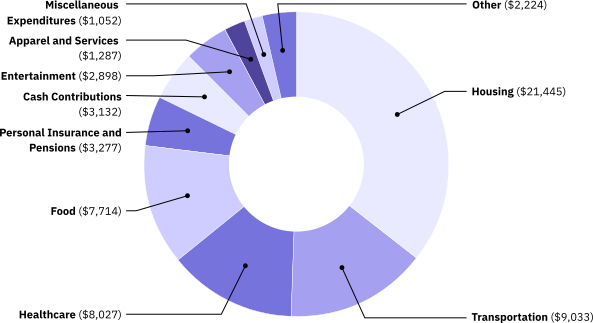
Source: “Average Monthly Costs for Retirees: A Breakdown of Housing, Food, and Other Expenses.” Investopedia, Dec. 17, 2025.
For many households, retirement spending ranges from 55% to 80% of preretirement income, depending on earnings, lifestyle choices, and medical needs. Establishing a retirement budget before you stop working lets you replace guesswork with a clear, actionable plan.
Retirement income replacement ratio: A starting point
One widely used planning benchmark is the retirement income replacement ratio, often referred to as the “80% rule.” This guideline suggests retirees may need about 80% of their working income to maintain a comparable standard of living.
For example, if you earn $80,000 annually, replacing 75% to 80% of your income means you’ll need to generate approximately $60,000 to $65,000 annually in retirement. This amount should serve as a baseline, not a fixed rule. Income level, debt, taxes, and personal goals can significantly influence the final number.
Higher earners often need to replace a smaller percentage of income, while lower earners may need closer to the upper end of the range to cover essential expenses.
How spending patterns change in retirement
Household spending does not remain static as people age. Consumer spending typically peaks in the years leading up to retirement, increases slightly during early retirement as people travel or pursue new interests, and then declines later in life.
While overall spending generally decreases after age 65, the composition of expenses shifts. Housing costs and transportation expenses often stabilize or decrease, while healthcare expenses tend to rise. Understanding these changes helps retirees anticipate where their money is most likely to go.
Healthcare costs in retirement require special planning
Healthcare is one of the most unpredictable and potentially costly aspects of retirement. Expenses often rise with age because of medical care, prescriptions, and possible long-term care needs. Historically, healthcare cost inflation has outpaced general inflation figures, and that trend is expected to continue by many experts.1
According to Fidelity Financial Solutions, retirees should expect about 15% of annual retirement spending to be allocated to healthcare expenses.2 Factoring these costs into your retirement income strategy can help prevent unexpected financial strain later in life.
If you find yourself facing a new diagnosis, managing a chronic condition, or preparing for end-of-life care, learn how Mercer Advisors can help you navigate health challenges with a financial plan.
Your expected post-retirement lifestyle
Lifestyle choices are one of the most influential variables in determining retirement spending. A retirement that centers on home-based or less physically demanding activities will generally require fewer financial resources than one defined by frequent travel, expensive hobbies, or maintaining multiple residences. Because these choices directly affect cash flow, they should be incorporated into your retirement budget to help prevent excessive withdrawals during the initial years of retirement.
Retirees may underestimate how much structure and time consumption their working years provided. Once employment ends, that time must be filled with activities, experiences, and hobbies to maintain both engagement and quality of life. As a result, retirees who plan to remain highly active — particularly in the early stages of retirement — should ensure their leisure and lifestyle budgets accurately reflect those intentions.
Retirement budgeting strategies: Questions to ask before you retire
As retirement approaches, working with a wealth advisor can help refine your income and spending strategy. Key topics to address include:
- Should outstanding debt be paid off before retirement?
- Will you provide financial support to children or grandchildren?
- How much travel or discretionary spending is planned?
- Are you considering relocating or changing housing arrangements?
- How might taxes and healthcare costs affect your income?
- How could spending impact your ability to pay for long term care or leave an inheritance?
Taking the time to clearly define what a fulfilling retirement looks like, and evaluating these factors in advance, helps support more confident decision-making throughout retirement.
FAQs
How much should I expect to spend in retirement?
Most retirees spend between 55% and 80% of their preretirement income, depending on lifestyle, income level, and healthcare needs.
Is the 80% rule accurate for everyone?
No. The 80% rule is just a starting point. Individual circumstances, such as debt, travel plans, and medical costs, require adjustments.
Do retirees spend less as they get older?
Spending patterns tend to evolve over time. Costs associated with transportation, clothing, and entertainment often decline as retirees age, while healthcare expenses typically increase.
How much should I budget for healthcare in retirement?
Plan to allocate approximately 15% of your annual retirement expenses to healthcare, with additional reserves for unexpected costs.
Should I work with a wealth advisor?
A wealth advisor can help align your retirement income with realistic spending expectations and a financial plan to help you reach your long-term goals.
Mercer Advisors has worked with thousands of clients to design retirement plans that help them achieve their financial goals. If you’re not a client and you’d like to learn more, let’s talk.
1 “Health Care Costs and Affordability.” KFF, Oct. 8, 2025.
2 “How much will you spend in retirement?” Fidelity Viewpoints, Sept. 1, 2025.
All expressions of opinion reflect the judgment of the author as of the date of publication and are subject to change. Some of the research and ratings shown in this presentation come from third parties that are not affiliated with Mercer Advisors. The information is believed to be accurate but is not guaranteed or warranted by Mercer Advisors. Content, research, tools and stock or option symbols are for educational and illustrative purposes only and do not imply a recommendation or solicitation to buy or sell a particular security or to engage in any particular investment strategy. Hypothetical examples are for illustrative purposes only.