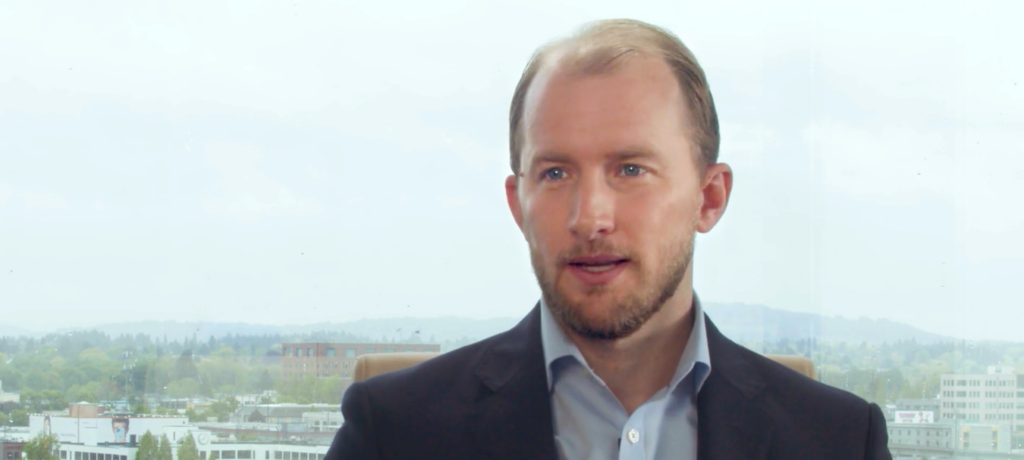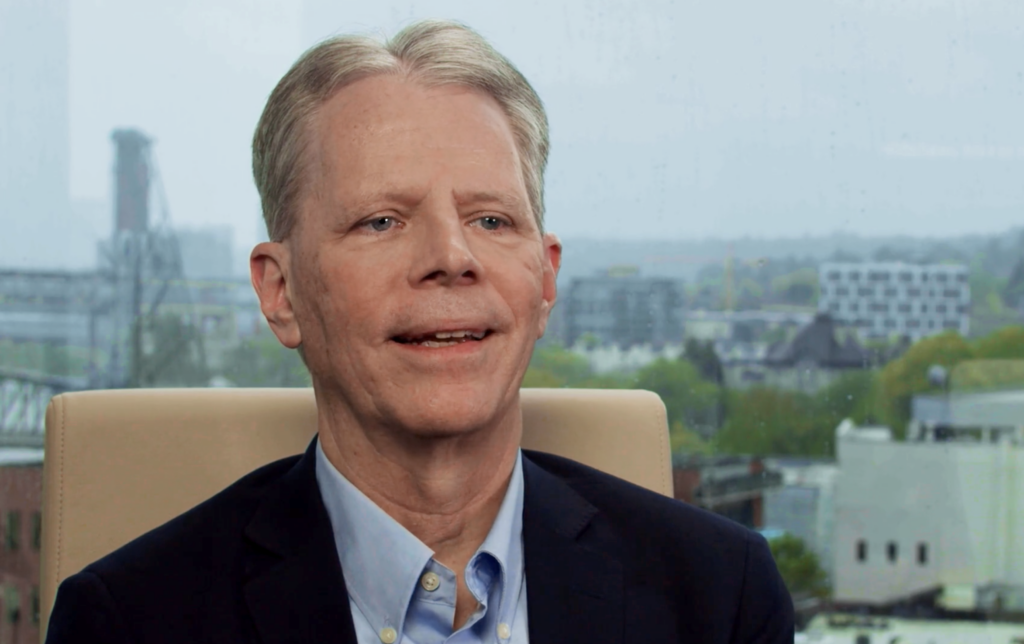




After graduating from dental school in 2000, Dr. Darren Huddleston purchased a practice in Grants Pass, Oregon, where he still practices today. While he ran a profitable practice during the early years in his career, it wasn’t until he signed up for Mercer Advisors’ 360° Planning® that his professional and personal lives truly aligned. With the help of his Mercer Advisors team of coaches, Dr. Huddleston can now make calculated, intelligent financial decisions while knowing how those decisions will affect his future vision. Thanks to the life vision he created with his Mercer Advisors team, Dr. Huddleston now has clarity about his goals and how to achieve them.
Dr. Huddleston kept his practice profitable until the recession hit in 2008. He says business began slowing down then: “I would have a bad month, a good month, followed by another bad month, and there was no way to make sense of it.”
Dr. Huddleston spent some time with his Mercer Advisors Regional Sales Manager, Mike Elster, dissecting his practice and diagnosing the opportunities for improvement. “That opportunity opened my eyes to the potential of the practice and got me motivated to attend a workshop,” he says, and he decided to bring his entire team to the Mercer Advisors Leadership workshop in Orlando in 2008, calling it “a dream to be able to bring my entire staff.” By bringing his entire team to Leadership, Dr. Huddleston says “all of the staff was on board with the Leadership philosophy and we decided as a group to go with 360° Planning.”
Dr. Huddleston says it was a simple philosophy that helped his business thrive during these times: “Revenue from routine dentistry has carried us by getting more people in the door for hygiene and simply understanding the value of each patient.” He has spent no additional money on advertising, relying instead on “starting with hygiene and building from there” with the help of his Mercer Advisors consulting team.
The increased practice production and successful turnaround in the business was just the tip of the iceberg, and the peace of mind Dr. Huddleston has achieved with his personal finances is “a whole other story.” “It amazes me, the number of team members Mercer Advisors has helping me.” After getting his finances in line at the practice, Dr. Huddleston’s Mercer Advisors Strategic Advisor, Loren Pierson, helped him to “develop a plan for where I want to be personally, then went back to look at the practice numbers so he could see all of the information together in order to come up with a plan for my life that involves personal planning for the family based on what the practice is doing.”
Considering the comprehensive nature of 360°Planning, which incorporates the economic engine of the practice and the way it funds the doctor’s personal life, Dr. Huddleston says, “You can’t get anything like that from another consultant; nobody puts it together like Mercer Advisors.” Along with the financial benefits he has experienced, Dr. Huddleston says the goal-setting, tracking, and comprehensive approach to managing every aspect of his practice has made dentistry interesting again.
As a member of the Oregon Board of Dentistry and a father of two, Dr. Huddleston says “I have many things pulling me in different directions.” Since implementing the strategies and systems recommended by his team of coaches at Mercer Advisors, and utilizing 360°Planning’s OnTrack software, Dr. Huddleston says “the team monitors itself, so when I spend time away from the office I don’t have to worry.” This peace of mind, and the increased production within his practice and how it has affected his personal life with the help of a 360° vision has been “life-changing.” Achieving this type of harmony allows Dr. Huddleston to focus on his family and other passions while knowing that everything is running smoothly while he is away.
At Mercer Advisors our objective is to help all of our clients achieve this type of success in their personal and professional lives with the help of 360° Planning and our team of expert advisors helping every step of the way.
By Mark T. Murphy, DDS, FAGD Lead Faculty of Practice Management, Mercer Advisors
Do you know the fundamental difference between chess and checkers? The board is the same. So, too, is the objective. Certainly chess is more strategic and complex, but why? In checkers, all of the pieces move the same. In chess, each piece or sets of pieces have distinct moves they can make. It is the management of these movements, the decisions we make with our pieces, which execute our strategies. Our decisions and choices in managing and leading a dental team similarly are responsible for our success or our frustration. It is not our choices about the dentistry that determines our success, but the ability to make good decisions about the business of dentistry.
It is the behavioral and communication issues about running a business that bother us most in dentistry. You see, we went to school to learn how to perform technical tasks that require technical training and skills; we did not go to school to learn how to run a business that is engaged in those technical skills. Therein lays the difference.
But there’s good news! Leadership and management can be learned. We have to consciously decide to develop these skills and capabilities, but they can be acquired.
Management focuses on doing things right. Leader ship focuses on doing the right things.
We clearly need to do both of these things well to succeed. Our vision and mission for the practice is something we should guard closely. Yes, our staff should help us articulate the mission of the practice, but only after we have the right people on the bus. We drive the bus, and it is our responsibility to decide where it is headed. Share that vision and dream, recruit the right team, and draft an operational mission statement to guide you in the direction that you (as dentist/leader) have chosen.
Managing the various policies, strategies, budgets, and metrics that get us there is a separate skill set that we need as well. Rallying the team to see the possibilities that the future holds and articulating that message is leadership’s responsibility. Putting the right people in the right jobs, giving them the tools, and then measuring and celebrating the results is management.
Great managers figure out what is unique about an individual and capitalize on it.
Great leaders sense what is common to the team and rally them to a better future.
Great managers select great people based on their strengths. They define clear expectations and measure activity and achievement. They praise and recognize people for good performance, and they care for their team. Man agers leverage people by identifying their strengths and weaknesses and coaching them appropriate to their learning style.
Great leaders motivate and inspire people, not by pushing them in the right direction, but by satisfying their basic human needs. Leaders are measured by the behavior of their followers. They accept total responsibility for their teams. Leaders eliminate confusion; they communicate well and most importantly, they listen.
To play checkers with a dental team does not make much sense. It is more like playing chess. Unfortunately, we have not all been given or taught the skills we need to manage or lead a team well. We went to dental school, not leadership, management, or business school. My good friend Dale Sorenson, DDS, spoke to the senior class a couple of years back at Indiana University Dental School. He told the class that their dental license was, of course, a license to practice dentistry, but also a license to learn. Graduation did not mean they were finished with learning; rather they had just begun. He did not mean only dentistry and the techno-clinical skills we need to be successful in that arena. He also meant a license to learn about the business of den tistry, communication, management, philosophy, leader ship, and the plethora of other skills that help us practice fulfilling and balanced professional lives — skills that help us lead our teams to a preferred future. If we do not seek these skills, we may end up frustrated and confused, tired and burned out.
Bob Dylan said, “If we are not busy growing, we are busy dying.” Success and fulfillment in dentistry will be the result of acquiring and executing several skill sets. Good leadership and management are two we cannot afford to skip. Get busy growing in these areas and it will make all the difference.
Attend Mercer Advisors Leadership – FREE – July 16-18 in Orlando, Florida, and exercise that license to learn about the business of dentistry, communication, management, philosophy, and leader ship.
Be a great manager AND a great leader.
At one time or another many dentists feel they are overworked and underpaid, leading to the question “how can I work less and earn more?”
Here are three ways you can ramp up your practice and work less while earning more:
1. Team Skills —You Can’t Do It Alone
Whether you have a three-person office or a 25-person office, you have no chance of decreasing time or increasing income without a skillful team. How much time have you spent in the last 6 months educating and training your team to be more efficient and productive?
It’s your responsibility to give your team both the training and the environment in which they can succeed at every level. Without a cohesive, motivated team, you’re looking at long hours, burn-out and stress about money!
Share with the team your vision of patient care and goals for the practice. Communicate the importance of establishing strong relationships with every patient, and do this by educating each patient about the need to maintain optimal oral health. Give your team the training to do it effectively and reap the rewards!
2. Clinical Skills —Deliver Dentistry More Effectively
You went to dental school because you want to practice dentistry – not because you were looking to own a business. One of the biggest complaints we hear from dentists is that they don’t have enough time in their schedule to do the dentistry that they really enjoy. The answer is simply learning how to increase your ability to deliver dentistry more effectively. Some of the easiest ways to achieve this are effective utilization of the team and maximizing the use of technology. Beyond that however, the quality and quantity of your dental skills directly influence the value of chair-side time. Without question, one of the best ways to keep those clinical skills efficient and effective is continuing education.
Dentists who want to remain enthusiastic and continue to grow their practice often take at least 2 major CE programs a year. Look at the type of dentistry you did in a 90-day period after taking a major CE program and ask yourself: “Did going to that course make a difference?” Don’t be surprised that you are not only diagnosing differently but also are treating differently because now you have more knowledge, are more focused and committed, and are less likely to allow busyness to intervene.
3. Associateships and Transitions —Extra Hands Equal Extra Value
Hopefully, each of the preceding steps, carefully executed, will bring you to a point where you have sufficient time to do the dentistry you like best. You can’t work any faster, and you don’t want to put in longer hours. At this point you have reached what we call the “sweet spot” in the life of your practice. You have developed your practice to the point where it can support more than just you as the sole provider. You are a successful business owner. It’s decision time.
Do you take the necessary steps to recapture the excess value you’ve built over the years or do you allow it to slide away? Unfortunately, too many dentists just “top out” and let the excess go. The wise dentist accepts that there’s excess practice value that isn’t going to be retained through manipulation of the clinical schedule. They welcome the reality that it’s time to take on an associate.
Understand you are not making decisions about either client care or quality of care. You are making decisions about the value of your business. You’ll gain nothing by rushing one of the most important aspects of your career. Get the proper education, plan all agreements so the new dentist can effectively and in a timely manner be brought to the point where he or she can afford to pay you for the share of the business at its full value. Take the time to recruit the right person who has the ability to communicate, has a proper attitude toward learning and who possesses compatible goals for the future.
With a well-executed practice transition, you are able to enhance your life both inside and outside the practice. You are preparing for your future retirement as well as adding flexibility to your schedule to pursue other passions in your life.
Mercer Advisors has pioneered and perfected the concept of a value transition that benefits the owner doctor, the associate, and the team. We know how important it is to find the right partnership, and we are able to focus on your individual needs, tailoring your transition in a way that is totally personalized. Our next Transitions workshop is in Washington, D.C., June 25-27, and tuition to attend is FREE for you, your spouse or siginificant other, your associate, or team members. Follow the link for more information and registration.
Remember: there’s a simple recipe for working less and earning more. Do the dentistry that YOU love, with the team that supports you and a patient base that is loyal to you. There is an answer – find it at Transitions.

Dr. Dennis Hamilton in Haiti with Mission to the World’s Disaster Response Ministry
On Tuesday, January 12th, a 7.0 magnitude earthquake struck less than ten miles from Port-au-Prince, the capital city of Haiti. Twelve aftershocks then followed, each measuring 5.0 or more. Structures from shantytown homes, to government buildings, to national landmarks collapsed leaving Haiti – already one of the poorest countries in the world – devastated.
Mission to the World’s Disaster Response Ministry (DRM) was one of the agencies that responded to the crisis. Pennsylvania dentist and Mercer Advisors client, Dr. Dennis Hamilton, was part of the assessment team that flew into Haiti to establish a location for Mission to the World’s relief operations. He returned to lead a thirteen person medical team.
We recently talked to Dr. Hamilton about his experiences in Haiti.
As a member of the assessment team for the DRM, your job is to be the first to arrive and scout out a safe location for your operations; what challenges did the earthquake pose, and how did you work around them?
After the earthquake hit, I had my bag packed and I was ready to go, but we couldn’t get in since Port-au-Prince was shut down except to the military and the really big organizations. Then ten days after the disaster, I was on my way to a CE meeting and at 5:30 in the evening, I got a call on my cell phone asking if I could be at the Pittsburgh airport, which is an hour away, to catch a flight at 7:30. I turned around, and with the help of my wife, Carol, I made it with five minutes to spare. We had to fly into Cap-Haitien though in Northern Haiti and drive to Port-au-Prince by truck for six and a half hours on some of the nastiest roads I’ve ever been on. Literally, some of the bumps were so bad, guys in the backseats who didn’t have their seatbelts on hit their heads.
Once we were in Port-au-Prince, we spent four days living off granola and protein bars assessing the destruction. Several times we thought we found a good location but our engineer would say, “No way this is safe.” Finally, we found a location in a tent city close to the epicenter.
After we established a safe place to set up our operations, we had to get home to bring our team and supplies back.
Before we left for Haiti, DRM told us, “We know we can get you there, but we have no idea how you’re getting home.” So we basically stood on the runway thumbing for a ride back to the States and eventually caught a ride on a plane NASCAR’s Hendrick Motorsports loaned to the relief efforts.
After you were able to gather your supplies, assemble your team, and return to Haiti, what did you experience?
We worked out of a tent for two days helping in any way we could, then we connected with a medical team in an unfinished hospital. This gave us a facility and the capability to help some of the more extreme cases. The patients all slept on the floor. We slept on the floor too, but we set up our tents in the hospital and slept in them to avoid the malaria from the mosquitoes. We also took care of the patients and ran the ER during the night while the daylight medical team rested. For the first two nights we worked sixteen hour shifts, and delivered four babies on each of those nights. We were pretty beat, but it was rewarding. After that, we were able to find more support and split into 8-hour shifts. We spent the remainder of the week there. Once again, we had no idea how we were getting home. When we decided we were done, we were told if we could get to the airport in the middle of the night, a military transport might take us home. The nights were dangerous, so we hired two policemen to drive the team to the airport and we flew home on a C17 cargo plane. As we prepared to take-off, I noticed the military personnel inflating their air mattresses. I didn’t think I could fall asleep with all noise, but I followed their lead. I was asleep in probably 30 seconds in the oddest of places, right in front of a Hummer.
Many reports came back of the overwhelming amount of destruction and suffering. What helped you overcome the sense of helplessness so many people felt?
When you get there and you look around you say, “I’m just one person, how can I possibly make a difference here?” But then you see just one person, and you talk with them and you comfort them and you treat them in some way and you pray with them and they leave with a smile and you say, “Ok, I’m making a difference.” And you do it one person at a time.
How are you able to drop everything on a minutes’ notice and keep your practice running?
There was a point where I realized I wanted to do this type of work but I knew it would be difficult for me with a staff of nine to get away from the practice. I knew I couldn’t just tell my staff, “Hey, I’m taking off for two weeks to do these mission trips, you’re on your own.” That was when my wife and I sat down with our Strategic Advisor, Don Calcagni. He helped us clarify our finances and create a transition plan that would give me the flexibility I needed.
Today I have all the pieces in place to make this happen. I couldn’t do it without my great staff and associate, Dr. Jeremiah Bondra, willing to step up and keep things going. My supportive wife is ready to tackle the incredible logistics for each trip. I am grateful for all their support. They are the ones who really make it possible.
How has your experiences with the DRM changed your perceptions about life after you return to the United States?
Almost everybody that I know knows they’re going to have a roof over their head tomorrow, they’re going to have safe food and water. I saw people eating things that I just couldn’t believe, but that’s the best they could get. It was amazing. So when you do this, when you reach out to somebody else and you see their suffering, it changes how you see our problems. I came back from Haiti this time and is said to my wife, “Please do not let me complain about anything. Nothing. I think I’ve been pretty true to that ever since. I certainly don’t deserve it, but God has truly blessed me.”
Mission to the World
Mission to the World is the mission-sending agency of the Presbyterian Church in America. The Disaster Response Mission is one of the many types of missions they organize and sponsor around the globe.
If you would like more information on how you could become a volunteer, visit www2.mtw.org.

Corner of Love Dental Clinic in San Ramon
In this post is the story of Mercer Advisors’ Strategic Advisor, Nathan Ricks and three of his clients, Dr. Dick Quinn, Dr. Mike Campbell, Dr. Patrick McKenzie, and several of their family members who joined volunteers from around the world this February as part of Corner of Love’s Hope Explosion mission to San Ramón, Nicaragua.
In Nicaragua, they spent nearly two weeks providing dental care and education to the people of San Ramón and the nearby villages.
About San Ramón
The San Ramón region is one of the most impoverished areas of Nicaragua — already one of the poorest nations in the Western Hemisphere — where the average worker makes less than $2 a day. In San Ramón, villagers boil their drinking water and cook their meals on firewood, but firewood is scarce due to clear cutting, and the surface water is teeming with parasites causing widespread malnutrition in the region.
Because of this, families turn to sugar as a cheap and convenient source of calories while relying on imported soda, beer, or boiled coffee as a source of safe drinking water. With sugar being such an important part of the regions’ caloric intake and safe “hydration”, health issues and massive tooth decay plague both adults and children.
The days were long and the conditions challenging, but the rewards were great as the two teams involved in the mission provided assistance to nearly 11,000 people. The medical doctors delivered medical care and administered the anti-parasite drug, Mebendazole, while the dentists, using portable units, performed extractions and fillings, administered fluoride treatments, handed out toothbrushes and delivered hygiene education about the importance of brushing and washing hands.
Team 2 with 51 Members
Mission Quick Facts
- Two teams, consisting of 131 people from across the U.S. and Canada, as well as a group of medical students from Fukuoka, Japan, served approximately 11,000 people.
- Clinics operated in 23 impoverished villages plus a clinic for the Volunteers and the Corner of Love Family Sponsorship Program.
- A financial donation was given to each of the 23 villages for the purpose of improving water quality, drilling wells, or piping in clean water to school, churches, and water sharing locations.
- A celebration for the groundbreaking of the Leadership School and Medical Clinic took place with an important visit from the U.S. Ambassador, Robert Callahan.
Dr. Dick Quinn, DDS
On my first trips, basically all we could do was extractions and our first dental chair was an old wooden rocking chair that was held back by a 2×4 and the patient rested their head on a 4×4 post with towels on it. We are now seeing fewer extractions and are able to do more fillings. Little by little, we’ve also been able to improve our equipment and even purchase some field dental chairs from a military auction site. But we are still working in villages, on dirt floors, and sometimes, even under trees if we have to.
It is just amazing how you would think the people we meet would be so dissatisfied with their lives, but they seem to be quite content even though they have what we could consider nothing. It is a life-changing experience to see and appreciate their contentment.
Dr. Mike Campbell, DDS
When you do go out to the villages, you see that even the dogs and the chickens and the animals look malnourished, and that’s when it really impacts you that the need is endless, but you do what you can.
In town, you see many patients who have walked sometimes six or even eight hours to get there. Knowing this, the difficult part is trying to have the time to see everyone, but it is very rewarding and a great thing to be able to share when you get back.
Dr. Patrick McKenzie, DDS
There was a woman one year for whom we removed all the dark decay in her front teeth. When we showed her the work we had done, she started crying because it looked so nice. We also saw an 8-year-old girl who came in because her teeth hurt. When I looked at her teeth, her 6-year molar teeth, which had only been in her mouth two years, were just terribly decaying. The lower two I had to extract and I also had to take out two primary teeth. I looked at the rest of her teeth and there was more I needed to work on, but there just wasn’t enough time to do everything.
One wants the best for people and to help alleviate their suffering and show them we respect them as human beings and that we have love for them. Sometimes there just isn’t enough time or resources, and one just has to do the best one can with the available resources.
Strategic Advisor, Nathan Ricks
Travelling with my wife and children, they saw so many children who wanted to attend school, but couldn’t because their family couldn’t afford shoes or the school uniform. It definitely gave my children a different perspective about the value of attending school and was a great lesson that regardless of the different socioeconomic or language differences that we have, every person has infinite worth.
How You Can Help
No matter where you go in the world, everyone needs the care of a dentist. If you would like to give your services to those in need, but are unable to because of the demands of your practice, let Mercer Advisors know and we can help you find a way to make it happen.
Along with general volunteering, Corner of Love has a great need for trained dental assistants, dental technicians, money to purchase med packs (Corner of Love has a partnership to acquire these at a deep discount), and any equipment that can be shipped into the country.
If you would like to learn more about Corner of Love’s missions and how you can contribute, visit www.corneroflove.org, or contact Executive Director, Tanya Amador directly at tanya@corneroflove.org.
In addition to eight categories in our Mercer Crown Club Awards presented at the 360° Planning® Client Appreciation event in Cabo San Lucas , we were thrilled to add a very special ninth category, the Lifestyle Achievement Award. Congratulations to Dr. MH & Mrs. Karol Peters for their win – by a mile!
On the fourth and final day of Mercer Advisors Practice Analyst Kim Thomas’s consulting visit, in the middle of a team meeting, Dr. Peters had a stroke, falling and dislocating both shoulders. Mrs. Peters, proving herself to be unbelievably amazing, rushed Dr. Peters to the hospital while instructing the team and Kim Thomas to continue the meeting.
Calling periodically with updates, Mrs. Peters took care of her husband while contacting their Mercer Advisors Consultant, David Braddy, to discover their options. The stroke and shoulder injuries would leave Dr. Peters unable to work for two months, but both Dr. and Mrs. Peters were determined to carry through with their 360° Planning, and their amazing team was 100% behind them. David Braddy was able to put the doctor and his wife in touch with an organization that matches up retired doctors available to step in during times like this to avoid closing down a practice, and two doctors stepped in to keep the practice running smoothly.
Mrs. Peters continued to impress by working with the peer doctors, the team, and the patients to ensure that the practice remained a powerhouse and the 360° Plan put in place by Kim Thomas, David Braddy, and the remainder of the 360° Planning team would be carried out.
When Dr. Peters returned to work, production skyrocketed. Many of his patients had delayed treatment until his return, their loyalty and trust in him was that great.
The tenacity, strength, determination, and loyalty Dr. and Mrs. Peters showed during this time, and continue to show today, are astounding. We can think of no greater practice to award for Lifestyle Achievement than Dr. MH Peters and his wife, Mrs. Karol Peters.
Congratulations to the Dr. and Mrs. Peters for making the decision extremely easy. You are inspirations to the rest of us, and we are proud to have you as a part of our organization.
At this year’s 1st annual Mercer Advisors 360° Planning® Convention, we introduced the “Mercer Crown Club” to recognize the outstanding achievements of client attending the event. CROWN stands for Client Recognition in Ownership; ownership of their practice, their team, and their lives. Such a high level of engagement was certainly reflected in the performance of the practices represented at the event.
The awards were presented “Oscar” style, with the nominees in each category being announced and recognized, then the winner revealed via sealed envelope. Then, to the surprise of each winner, they were given a microphone and asked to give an “acceptance speech”. To hear how the lives of so many practices have been changed, to hear the excitement and passion of each winner… this was truly the highlight of the evening. Look for their stories in upcoming editions of The Bottom Line!
The overall success of 360° Planning has been well documented. The group of clients who attended the Mercer 360 Planning Client Appreciation Celebration took it to the next level! Below is a comparison of the national statistics compared to the practices in attendance in a few key areas.
Category National Average Cabo Average
Sr. Doctor Hourly Increase 9.8% 14.5%
Associate Hourly Increase 14.3% 22.3%
Average Hygiene Increase 5.5% 8%
The categories, nominees, and winners are as follows:
- Associate Hourly Increase as a Percentage
- Dr. Joseph Lechtenberg
- Dr. Tom Wuesthoff
- Dr. Mark Albritton
Congratulations to Dr. Tom Wuesthoff, with a 63.1% Increase!
- Overall Associate Hourly Increase
- Dr. Joseph Lechtenberg
- Dr. Brad Parrot
- Dr. Mark Albritton
Congratulations to Dr. Joseph Lechtenberg, with a $130 Increase!
- Hygiene Department Growth as a Percentage
- Dr. William Fitzgerald
- Dr. Charles McDonald
- Dr. John Crisler
Congratulations to Dr. Crisler, with a 94.2% Increase!
- Overall Hygiene Growth
- Dr. John Crisler
- Dr. William Fitzgerald
- Dr. Ken Ochi
Congratulations to Dr. Ken Ochi, with a $21,069 per month Increase!
- Hourly Revenue Growth as a Percentage
- Dr. Jason Knable
- Dr. Loren Wilson
- Dr. Joseph Lechtenberg
Congratulations to Dr. Loren Wilson, with a 29.2% Increase!
- Overall Hourly Revenue Growth
- Dr. Michael Armijo
- Dr. Nhi Pham
- Dr. Jason Juarez
Congratulations to Dr. Nhi Pham, with a $385 Increase!
- Practice Growth as a Percentage
- Dr. Joseph Lechtenberg
- Dr. Loren Wilson
- Dr. Jason Knable
Congratulations to Dr. Jason Knable with a 29.7% Increase!
- Overall Practice Growth
- Dr. Randall Deaton
- Dr. Nhi Pham
- Dr. Grossman & Dr. McKay
Congratulations to Dr. Randall Deaton with a $33,244 per month Increase!
In addition to the categories outlined above, we were proud to honor one doctor and his wife with a very special tribute – the Lifestyle Achievement Award. Read more about the inspiring story of Dr. MH Peters and his wife, Mrs. Karol Peters.
Congratulations to the winners and nominees of our 1st Annual Mercer Crown Club Awards! Keep up the good work, and you all really set the bar for those who will follow. Way to go!